
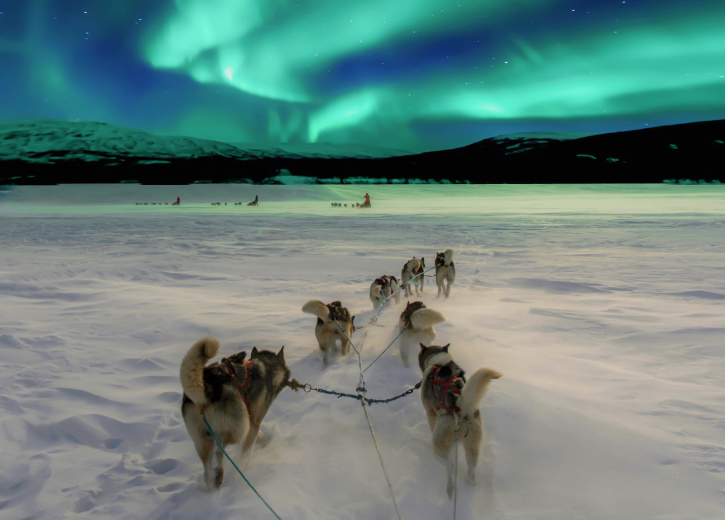
Picture this: you’re standing beneath a vast Arctic sky when ribbons of green light begin their celestial dance overhead. The difference between witnessing this magical moment in a crowd of fifty tourists versus a small group of fellow aurora enthusiasts can transform your entire northern lights experience. When planning activities in Lapland, the size and style of your aurora hunting tour matters far more than many travellers realise. Whilst large coach tours certainly have their place, minivan expeditions offer unique advantages that can mean the difference between a fleeting glimpse and an unforgettable encounter with nature’s most spectacular light show.
The choice of how you chase the northern lights influences everything from the locations you can access to the quality of your photographs, the depth of knowledge you gain from your guide, and ultimately, the memories you’ll carry home from your Arctic adventure. Understanding these differences helps you make an informed decision about which approach suits your travel style and aurora viewing aspirations.
Why smaller groups transform northern lights viewing
The fundamental mathematics of aurora hunting reveals an important truth: group size directly impacts experience quality. When a large coach carrying forty or fifty passengers arrives at a viewing location, the collective noise, movement, and light from mobile phones creates significant disturbance. This not only affects the natural ambience but also introduces light pollution that can diminish the visibility of fainter aurora displays. In contrast, a minivan typically accommodates six to twelve guests, creating a naturally quieter and more contemplative atmosphere.
Beyond the immediate viewing environment, smaller groups unlock access to remote locations that remain impossible for large coaches. Northern Finland’s network of forest tracks and elevated viewing points often features narrow roads unsuitable for full-sized buses. These hidden spots frequently offer superior views precisely because they’re difficult to reach and therefore less crowded. A minivan can navigate these routes comfortably, positioning you in pristine wilderness areas where the only sounds are the crunch of snow underfoot and perhaps the distant call of a fox in the darkness.
The agility factor becomes particularly crucial when aurora conditions shift rapidly. Whilst a large tour must coordinate bathroom breaks, keep track of numerous passengers, and maintain a rigid schedule, minivan groups can make swift decisions. If your guide spots a break in the cloud cover thirty kilometres to the east, a small group can be there within twenty minutes. This responsive flexibility often makes the difference between missing the aurora entirely and witnessing a magnificent display. Large bus tours, constrained by logistical complexity and predetermined routes, simply cannot adapt with the same speed and spontaneity that successful aurora hunting demands.
The flexibility advantage in aurora hunting
The northern lights refuse to follow schedules or respect itineraries. Cloud coverage can shift within minutes, aurora activity fluctuates throughout the evening, and the best viewing locations change based on numerous atmospheric variables. This unpredictability makes flexibility the single most valuable asset in aurora hunting, and minivan tours excel precisely in this dimension.
Professional aurora guides monitor multiple data sources throughout the day: satellite cloud imagery, aurora forecasts, local weather patterns, and real-time reports from other guides in the field. When operating a minivan tour, guides can translate this information into immediate action. If the forecast suggests clearer skies near the Norwegian border, the route adjusts accordingly. When aurora activity intensifies unexpectedly in a particular region, the minivan can extend time at optimal locations rather than adhering to a fixed timetable. This dynamic approach to route planning maximises your chances of witnessing strong aurora displays.
The ability to visit multiple locations during a single evening provides another strategic advantage. A typical minivan aurora tour might begin at a lakeside location, move to an elevated viewpoint if conditions warrant, and finish at a sheltered forest clearing if wind picks up. Each location offers different photographic opportunities and perspectives on the aurora. Large bus tours, by contrast, typically commit to one or two predetermined stops regardless of how conditions evolve, simply because relocating dozens of passengers repeatedly becomes logistically impractical.
The most successful aurora hunters understand that chasing the lights isn’t about following a map—it’s about reading the sky and responding to what nature reveals moment by moment.
This adaptive approach extends to timing as well. If aurora activity begins earlier than expected, a minivan tour can depart ahead of schedule. If the display peaks later in the evening, the group can extend their time in the field. This temporal flexibility, combined with spatial mobility, creates significantly more opportunities to witness the northern lights at their most spectacular.
What makes an intimate aurora experience valuable?
The qualitative difference between viewing the aurora in a crowd versus a small group extends far beyond mere comfort. When you’re surrounded by dozens of other tourists, each with their camera flashes and mobile phone screens glowing, the ambient light pollution can actually reduce your ability to see fainter aurora displays. Your eyes need approximately twenty minutes to fully adapt to darkness, and this adaptation resets each time someone nearby uses a bright screen or flash. In a small minivan group, it becomes much easier to maintain the darkness necessary for optimal viewing.
Photography enthusiasts particularly benefit from intimate group settings. Capturing the northern lights requires long exposures, often fifteen to thirty seconds, during which any movement in your frame creates blur. In crowded locations, avoiding other people in your shots becomes nearly impossible. Smaller groups naturally spread out more, giving each photographer space to compose their images without silhouettes of strangers dominating the foreground. The reduced light pollution also means cleaner, more vibrant aurora photographs with better colour definition and less noise.
Perhaps most significantly, intimate groups enable meaningful interaction with your guide. When a guide manages six guests rather than forty, there’s time to answer individual questions, share deeper knowledge about Arctic phenomena, point out constellations, and explain the science behind the aurora in engaging detail. This educational dimension transforms the experience from merely seeing the lights to truly understanding them. You might learn to identify different aurora forms, understand what solar activity patterns mean, or discover how indigenous Sámi culture interpreted these celestial displays.
The emotional impact of experiencing the aurora in peaceful surroundings cannot be overstated. Standing beneath dancing lights in near silence, hearing only the wind through pine trees and the soft crunch of snow, creates a profound connection with the Arctic wilderness. This sense of immersion in nature becomes diluted when you’re part of a large crowd. The northern lights deserve to be witnessed in an atmosphere that honours their majesty—quietly, thoughtfully, and with full attention to the extraordinary natural phenomenon unfolding above.
How Aurora Queen Resort combines comfort with authenticity
The philosophy behind truly memorable activities in Lapland involves balancing modern comfort with authentic wilderness immersion. Whilst some approaches prioritise one dimension at the expense of the other, the most rewarding experiences recognise that comfort and authenticity enhance rather than diminish each other. This perspective shapes how thoughtful aurora experiences are designed in northern Finland.
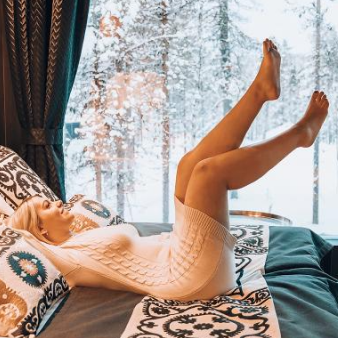
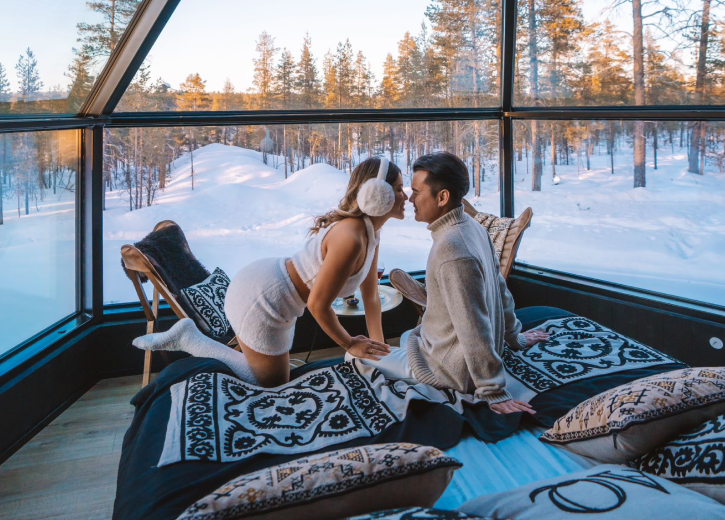
Staying in aurora view accommodation creates natural synergy with guided minivan tours. When your accommodation features glass ceilings designed for aurora viewing, you can monitor the sky from comfort throughout your stay. If the lights appear unexpectedly, you’re already positioned to witness them. This complements rather than replaces guided tours, which take you to diverse locations and provide expert interpretation you couldn’t access independently. The combination offers both convenience and adventure—you can watch for aurora from your accommodation and also venture into remote wilderness with knowledgeable guides who understand where and when to chase the lights.
Northern Finland’s strategic position within the aurora zone provides significant advantages for consistent viewing opportunities. Located well above the Arctic Circle, this region experiences long winter nights and sits directly beneath the auroral oval—the ring-shaped zone where aurora activity concentrates. This geographical positioning means aurora displays occur with greater frequency and intensity compared to locations further south. When combined with relatively accessible wilderness areas and lower light pollution than more developed regions, northern Finland offers an ideal environment for aurora hunting.
At Aurora Queen Resort, we approach northern lights experiences with the belief that meaningful connections with Arctic nature emerge through thoughtfully designed activities rather than rushed, checklist-style tourism. Our minivan tours focus on quality over quantity, prioritising optimal viewing conditions and genuine engagement with the landscape. Guides check forecasts throughout your stay and recommend the evening with the strongest potential for aurora activity, rather than operating tours on a fixed schedule regardless of conditions. This approach respects both the unpredictable nature of the aurora and your investment of time and anticipation in witnessing this phenomenon.
The intimate scale of minivan expeditions aligns naturally with the broader philosophy of creating personal connections with Lapland’s winter wilderness. Whether you’re searching for the northern lights, exploring snow-covered forests, or simply absorbing the profound silence of the Arctic night, smaller groups facilitate deeper experiences. This isn’t about luxury in the conventional sense—it’s about removing the barriers between you and the natural world, allowing the aurora to be experienced as it has been for millennia: as a source of wonder, mystery, and connection to forces far greater than ourselves.