

Reindeer herding is important to Sámi identity because it anchors the Sámi people’s language, social structure, craftsmanship, and relationship with the land across generations. Herding is not only an occupation but a way of life that connects families to seasonal landscapes, shared knowledge, and a distinct worldview. This article answers the most common questions about how herding continues to shape Sámi culture across Sápmi, the Sámi homeland.
How does reindeer herding shape the Sámi language?
Reindeer herding shapes the Sámi language by supplying it with an exceptionally detailed vocabulary for reindeer, snow, ice, and terrain. Sámi languages contain hundreds of specialised terms describing a reindeer’s age, sex, coat colour, antler shape, and behaviour, allowing herders to identify individual animals within a large herd at a glance.
This reindeer vocabulary is practical rather than decorative. A single word can tell a herder that an animal is a two-year-old female with particular markings, saving time and preventing confusion during gatherings or when searching for strays. Snow has its own precise terminology too, with distinct words for its depth, crust, and suitability for grazing or travel.
Because the language developed alongside herding, many Sámi concepts of direction, distance, and time are tied to the movements of the herd and the turning of the seasons. Preserving Sámi languages is therefore closely linked to preserving herding knowledge, and each strengthens the other. Today, Sámi languages are recognised in Finland, and teaching them to younger generations remains an important cultural priority.
What is a siida and how does it work?
A siida is a traditional Sámi community unit made up of families who share reindeer herding, land use, and resources within a defined territory. It works through cooperation: members herd together, follow seasonal migration routes, and make collective decisions about pastures, labour, and the care of the animals.
Historically, the siida was the foundation of Sámi society, long before modern municipal borders existed. Each siida moved between winter and summer grazing lands, and its members relied on one another for survival in a demanding Arctic climate. Knowledge about weather, ice conditions, and predators was shared openly within the group.
In Finland today, the herding cooperative, known as a paliskunta, serves a similar practical role, managing reindeer husbandry within a given area. While the modern structure is administrative, the spirit of the siida lives on in the way herding families work together, share workloads during round-ups, and pass skills from elders to children.
How are reindeer used in Sámi crafts and daily life?
Reindeer provide materials, food, and transport that have supported Sámi daily life for centuries. Antler, bone, hide, sinew, and fur are all used in Sámi handicraft, known as duodji, while reindeer meat remains a cornerstone of traditional Sámi cooking and a staple of Lapland cuisine.
Duodji is far more than souvenir making. It is a functional art form guided by the principle that objects should be both useful and beautiful. Common examples include:
- Knives and tools: handles carved from antler or bone, often decorated with fine engraved patterns.
- Clothing and footwear: reindeer-hide boots and fur garments that offer exceptional insulation in extreme cold.
- Sinew thread and pewter embroidery: traditional techniques used to sew and decorate clothing and accessories.
- Containers and ornaments: items shaped from antler and bone for everyday use.
Reindeer also served as draft animals, pulling sleighs across snow-covered terrain. Nothing was wasted, which reflects the deep respect for the animal and the environment that remains central to Sámi values.
Is Sámi reindeer herding still practised today?
Yes, Sámi reindeer herding is still practised today, though it now combines traditional knowledge with modern tools. In Finland, reindeer husbandry takes place across the northern part of the country, and many Sámi families continue to herd, while herding is also practised by other residents within the reindeer herding area.
Modern herders may use snowmobiles, all-terrain vehicles, and GPS equipment alongside inherited skills in reading weather, snow, and animal behaviour. The annual cycle still follows the old rhythm: calving in spring, summer grazing, autumn round-ups and slaughter, and winter pasture use.
Herders today face real pressures, including a changing climate that affects snow and ice conditions, competing land use such as forestry and tourism, and predators. Despite these challenges, herding continues as a living tradition that remains central to Sámi people in Lapland and to the cultural continuity of the whole homeland.
For many of us who live and work in Saariselkä, reindeer are simply part of the landscape, and it is common to see them wandering freely near the roads and forests, especially in the cooler months.
How can travellers learn about Sámi culture respectfully?
Travellers can learn about Sámi culture respectfully by choosing authentic, locally led experiences, listening more than assuming, and treating Sámi traditions as a living culture rather than a performance. Visiting a reindeer farm in Lapland is one of the most direct and welcome ways to understand herding and its place in Sámi life.
A few simple principles help visitors engage thoughtfully:
- Support local operators. Book experiences run by or in genuine cooperation with local people, so that tourism benefits the community.
- Ask before photographing. People, traditional clothing, and sacred places deserve consent and consideration.
- Use correct terms. Refer to the Sámi people by their own name, and avoid outdated or inaccurate labels.
- Buy genuine duodji. Look for authentic handmade crafts from Sámi artisans rather than mass-produced imitations.
- Respect the land. Stay on marked paths, leave no trace, and give grazing reindeer space.
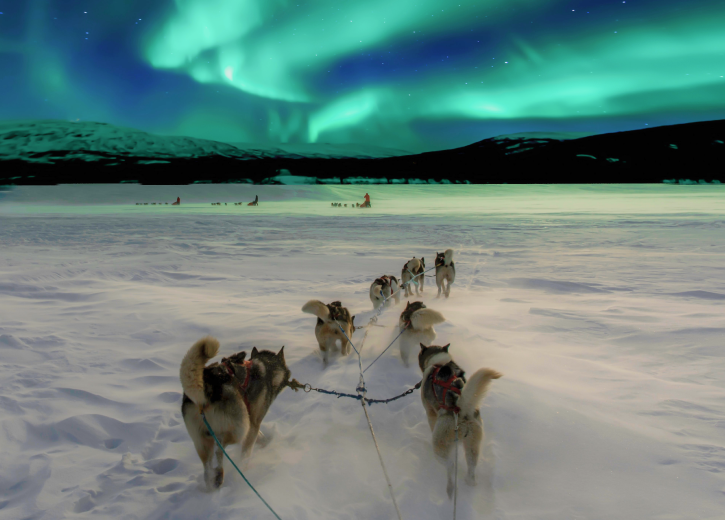
At our resort in Saariselkä, we arrange visits to a reindeer farm and reindeer sleigh rides and other activities, which give guests a gentle, hands-on introduction to the animals at the heart of this culture. Evenings offer another way to connect with Lapland’s natural world. Our Northern Lights Adventure by Minivan is a three-hour evening tour, priced at 175 euros per person with a minimum charge for two people, that lets you explore the dark Arctic sky in comfort. Our guides check the latest aurora and visibility forecasts and choose the most promising evening of your stay, although we cannot guarantee that the lights will appear. Many Sámi stories and beliefs are connected to the night sky, so watching it with a knowledgeable guide adds a meaningful layer to the experience.
Whether you spend your time with reindeer in the daylight or beneath the stars at night, approaching Sámi culture with curiosity and humility will leave you with a deeper appreciation of why herding remains so central to Sámi identity when you book your stay.