

Finnish Lapland is widely regarded as Europe’s most snow-sure destination because of its location deep within the Arctic Circle, where cold temperatures arrive early, stay long, and deliver consistent, reliable snowfall season after season. Unlike more southerly European winter destinations, Finnish Lapland benefits from a subarctic climate that keeps snow on the ground for months at a time, often from October through to May. Below, we unpack exactly why that is, and what it means for anyone planning a winter trip north.
What makes Finnish Lapland’s snowfall so reliable?
Finnish Lapland’s snowfall is reliable because its position above the Arctic Circle gives it a subarctic climate with long, cold winters and minimal thaw risk. Temperatures regularly drop well below freezing from autumn onward, meaning snow that falls stays put. The region’s distance from the warming influence of the Atlantic Ocean further stabilises winter conditions, making significant mid-season thaws far less common than in central or western European ski areas.
This reliability is not simply a matter of latitude. The landscape itself plays a role. Finnish Lapland is characterised by open fells and boreal forests that trap and accumulate snow naturally. Wind-blown snow collects in valleys and on slopes, building up a deep, consistent snowpack over the course of the winter. In areas like Saariselkä, snow fences are also used to gather drifting snow and direct it onto ski slopes, supplementing natural snowfall and extending the usable season. Snowmaking infrastructure provides an additional layer of insurance during drier spells.
The result is a destination where the question of “will there be snow?” is rarely a serious concern. That is a significant advantage over many Alpine resorts, where warming trends have made early- and late-season snow increasingly unpredictable.
How long does the snow season last in Finnish Lapland?
The snow season in Finnish Lapland typically lasts from October or early November through to late April or May, giving the region one of the longest continuous snow seasons of any destination in Europe. In the northernmost parts of Lapland, snow cover can persist for well over 200 days a year, far exceeding what most ski destinations on the continent can offer.
In Saariselkä specifically, the planned skiing period for the 2026 to 2027 winter season runs from late November through to early May. This extended window is a direct result of the region’s northern location and the cold temperatures that keep the snowpack intact long into spring. Spring skiing in Finnish Lapland is particularly special: the days grow longer, temperatures rise enough to be comfortable outdoors, and the firm spring snow creates excellent conditions for both downhill and cross-country skiing.
For travellers who prefer to avoid the peak holiday crowds of December and January, this long season opens up compelling alternatives. A March or April trip to Finnish Lapland can offer bright, sunny days, impressive snow depths, and a quieter, more relaxed atmosphere, all with the reassurance that the snow will still be there.
How does Finnish Lapland compare to other European winter destinations?
Compared to other European winter destinations, Finnish Lapland offers a significantly longer and more consistent snow season, with far less exposure to the mid-winter thaws and rain events that affect lower-altitude or more southerly resorts. While Alpine destinations can offer impressive mountain scenery and extensive ski infrastructure, their snow reliability has become increasingly variable, particularly at lower elevations. Finnish Lapland’s Arctic location places it in a different category entirely.
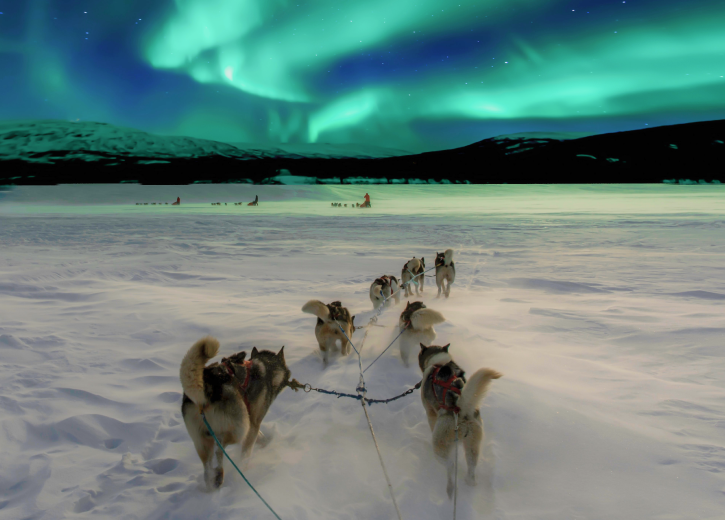
The distinction goes beyond snow depth. Finnish Lapland delivers a qualitatively different kind of winter experience. The landscapes are vast and largely untouched, the skies are dark enough for outstanding Northern Lights viewing, and the cultural experience, from reindeer farm visits to husky safaris, is unique to this corner of the world. A week in Finnish Lapland is not simply a ski holiday; it is an immersion in Arctic nature that few other destinations in Europe can replicate.
In terms of accessibility, Finnish Lapland is also well connected. Ivalo and Rovaniemi airports both receive international flights, and from there the journey north is straightforward. For travellers coming from further afield, Helsinki acts as a convenient hub, making Finnish Lapland genuinely accessible from almost anywhere in the world.
What is the best time to visit Finnish Lapland for snow?
The best time to visit Finnish Lapland for snow is between December and April, with each month offering a distinct experience. December brings the magical darkness of polar night and the highest probability of Northern Lights sightings. January and February offer reliable deep snow and cold, crisp conditions ideal for outdoor activities. March and April shift into spring, with longer days, bright sunshine, and a snowpack that remains impressively deep.
For those prioritising snow quantity and quality, late February through April is arguably the sweet spot. Snow depths tend to be at their greatest in March and April: the record snow depth measured in Saariselkä during the winter of 2020 reached 138 centimetres in April, which illustrates just how substantial the late-season snowpack can be. Spring snow is also firmer and easier to ski on than the lighter powder of midwinter.
Families and travellers who want to combine snow activities with daylight hours will find March and April particularly rewarding. The sun returns to the Arctic in earnest from late February, and by April the days are long and luminous, creating a striking contrast with the white landscape below. For Northern Lights enthusiasts, the equinox periods around March are also statistically among the most active times for auroral activity.
Why is Saariselkä one of Finland’s snowiest areas?
Saariselkä is one of Finland’s snowiest areas because of its northern location, elevated fell terrain, and exposure to weather systems that deliver consistent snowfall throughout winter. Situated in Northern Lapland, Saariselkä sits at a latitude that keeps temperatures reliably sub-zero for months at a time, preventing the freeze-thaw cycles that erode snowpack in more temperate regions. Its position adjacent to Urho Kekkonen National Park also means the surrounding landscape is entirely undeveloped, preserving natural snow accumulation patterns.
The Saariselkä ski area sits on the fells of Kaunispää and Iisakkipää, making it the northernmost ski resort in Europe. This distinction is more than a geographic curiosity: it means that the resort benefits from a longer period of sub-zero temperatures than virtually any other ski destination on the continent. Snow that falls in November stays through to May, building a deep and stable base that supports both groomed pistes and off-piste exploration.
The fell landscape also plays a practical role in snow management. Open, elevated terrain allows wind-blown snow to be collected using snow fences and redirected onto slopes, supplementing natural snowfall and ensuring consistent coverage even during drier spells. The combination of natural snowfall, favourable topography, and active snow management makes Saariselkä one of the most dependable snow destinations in all of Finland.
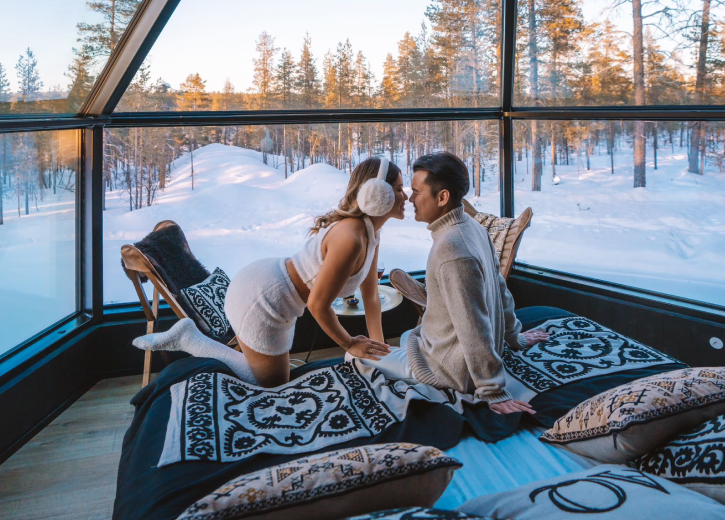
For those drawn to this kind of guaranteed Arctic winter, we welcome guests at Aurora Queen Resort in Saariselkä to experience it from a uniquely intimate vantage point. Watching the snow-covered fell landscape from the warmth of our Arctic glass igloos in Saariselkä, with the Northern Lights moving overhead and a fox padding silently through the wilderness outside, is the kind of moment that makes the journey north entirely worthwhile. If you are ready to plan your own Arctic escape, book a glass igloo in Saariselkä and secure your place in one of Europe’s most extraordinary winter settings.