
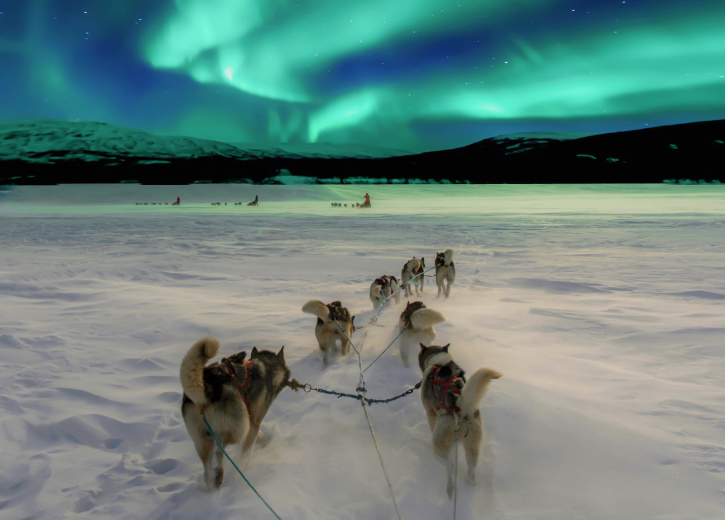
Evening darkness provides the optimal contrast needed to see the Northern Lights clearly against the night sky. Complete darkness eliminates light pollution and residual sunlight that can wash out the aurora’s colours and intensity. The darker the environment, the more vibrant and detailed the Northern Lights appear to both your eyes and cameras. This visibility advantage makes evening hours the preferred time for aurora-viewing experiences.
What makes evening darkness essential for Northern Lights visibility?
Complete darkness creates the necessary contrast between the aurora’s natural glow and the night sky background. The Northern Lights emit relatively subtle light compared to artificial sources, so any competing illumination significantly reduces their visibility. Light pollution from towns, streetlights, or even bright moonlight can overpower the delicate green, pink, and purple hues that make aurora displays so spectacular.
The human eye requires approximately 20–30 minutes to fully adapt to darkness, allowing pupils to dilate and sensitivity to increase. During this adaptation period, your ability to detect faint aurora activity improves dramatically. Dark-sky conditions enable you to spot aurora displays that would remain completely invisible under brighter circumstances.
Natural darkness also enhances the aurora’s three-dimensional appearance. In complete darkness, you can observe the aurora’s movement patterns, dancing curtains, and varying intensities across different parts of the sky. These subtle details disappear when competing light sources flatten the visual experience.
How do different light conditions affect what you can see in the aurora?
Light conditions dramatically influence both the colours visible in Northern Lights displays and their apparent intensity. During complete darkness, you can observe the full spectrum of aurora colours, including subtle pinks, purples, and blues that complement the more common green emissions. Brighter conditions wash out these delicate hues, leaving only the strongest green colours visible.
Moon phases play a crucial role in aurora viewing quality. A new moon provides the darkest conditions, revealing faint aurora activity and subtle colour variations. Quarter moons offer enough ambient light to see your surroundings while maintaining good aurora visibility. Full moons create bright conditions that can overwhelm weaker aurora displays, though they illuminate the landscape beautifully for photography.
Photographic opportunities vary significantly with lighting conditions. Complete darkness requires longer camera exposures but captures the aurora’s full colour range and intensity. Moderate moonlight allows shorter exposures and creates stunning compositions with illuminated landscapes. However, bright conditions require careful camera settings to balance aurora visibility with foreground details.
What time of evening offers the best Northern Lights viewing window?
The optimal Northern Lights viewing window in northern Finland typically begins 1–2 hours after sunset and continues until dawn during aurora season. Complete astronomical darkness occurs when the sun reaches 18 degrees below the horizon, usually 2–3 hours after sunset depending on the season and latitude.
During autumn and spring, darkness arrives earlier in the evening, creating longer viewing windows. September through March offers the most reliable dark-sky conditions, with peak viewing hours typically between 9 pm and 2 am. The winter months provide extended periods of darkness, sometimes lasting over 18 hours in the far north.
Aurora activity often peaks during late evening and early morning hours, coinciding with optimal darkness conditions. Professional aurora guides monitor space weather forecasts and local conditions to predict the most promising viewing times. This expertise becomes invaluable when planning a once-in-a-lifetime experience, as aurora displays can vary significantly from night to night based on solar activity and atmospheric conditions.
Why can’t you see Northern Lights as clearly during twilight hours?
Residual sunlight during twilight hours creates competing illumination that interferes with aurora perception. Even when the sun appears to have set, scattered sunlight continues to brighten the sky for several hours, masking the aurora’s subtle glow. This phenomenon explains why patience for complete darkness significantly improves your viewing experience.
Astronomical twilight ends when the sun reaches 18 degrees below the horizon, marking the transition to true darkness. Before this point, scattered sunlight creates a blue glow in the sky that overpowers all but the strongest aurora displays. During civil and nautical twilight, only extremely intense Northern Lights activity remains visible.
The contrast principle governs aurora visibility throughout the progression of twilight. As residual sunlight fades, progressively weaker aurora displays become apparent. What appears as an empty sky during early twilight may reveal dancing curtains of light once complete darkness arrives. This gradual revelation often surprises viewers who witness their first aurora experience unfold as darkness deepens.
Wildlife in northern regions, including the elusive fox, follows similar patterns of increased activity during the hours of complete darkness. These creatures understand instinctively what aurora enthusiasts learn through experience: the deepest darkness reveals nature’s most spectacular displays. Understanding these natural rhythms enhances your appreciation of the precise timing required to witness the Northern Lights at their most magnificent.
Discover More Aurora Adventures
Ready to experience the magic of the Northern Lights in optimal conditions? Aurora Queen Resort offers expertly guided aurora viewing experiences and a variety of winter activities designed to maximize your chances of witnessing this spectacular natural phenomenon. From professional photography tours to cozy wilderness excursions, our activities are perfectly timed to take advantage of those crucial dark-sky conditions. Learn more about our Northern Lights activities and winter adventures to plan your unforgettable aurora experience in Finnish Lapland.