

Ultra-remote destinations are booming among luxury travelers because exclusivity, privacy, and an authentic connection with nature have become the new markers of true luxury. As urban experiences grow more accessible and crowded, wealthy travelers are seeking the opposite: silence, unspoiled wilderness, and the feeling of being somewhere genuinely rare. This article unpacks the key forces driving that shift, and what separates a truly exceptional remote luxury experience from a merely expensive one.
What is driving the surge in remote luxury travel?
The surge in remote luxury travel is driven by a fundamental shift in how affluent travelers define value. Rather than measuring luxury by thread counts or city-center addresses, today’s high-end traveler increasingly measures it by rarity, stillness, and depth of experience. The more inaccessible a destination, the more desirable it has become to those who can access it.
Several converging forces explain this trend. First, global connectivity has made mainstream luxury destinations feel saturated. When the same five-star hotel brands appear in every major city, and when the same rooftop bars attract the same crowds, the experience loses its sense of discovery. Remote destinations offer something genuinely irreplaceable: a place that cannot be replicated in a city, no matter the budget.
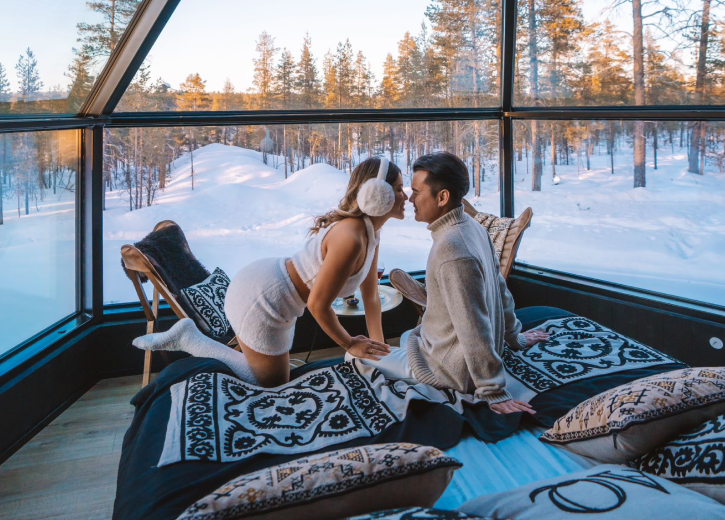
Second, there has been a meaningful cultural shift toward experience-first travel. Luxury travelers in 2026 are less interested in accumulating possessions and more focused on collecting memories that feel transformative. Witnessing the Northern Lights from a glass-ceiling igloo in Finnish Lapland, or tracking wildlife in a landscape untouched by development, creates a story worth telling in a way that a hotel suite in a familiar capital simply cannot.
Third, the pandemic years recalibrated many travelers’ relationship with space, quiet, and nature. That recalibration has proven lasting. The appetite for wide-open skies, clean air, and genuine solitude has not faded, and the luxury travel industry has responded accordingly with a growing number of boutique properties in far-flung locations.
Why do wealthy travelers prefer isolation over city luxury?
Wealthy travelers prefer isolation because genuine privacy and undisturbed nature have become scarce, and therefore valuable. In a world where urban luxury is widely available to anyone with a sufficient budget, true isolation cannot be purchased simply by upgrading a room category. It requires traveling somewhere most people will never go.
There is also a psychological dimension. Isolation in a beautiful natural setting offers a quality of rest that urban environments, however luxurious, cannot provide. The absence of noise, crowds, and the constant stimulation of city life creates a mental reset that many high-achieving travelers actively seek. Research in environmental psychology consistently points to natural settings as restorative in ways that built environments are not.
For many affluent travelers, the effort required to reach a remote destination is itself part of the appeal. The journey signals commitment and separates the experience from anything that can be casually replicated. When a destination requires a long-haul flight, a connecting regional flight, and a dedicated transfer, the reward feels earned, and the sense of arrival is proportionally more powerful.
What makes a destination qualify as ‘ultra-remote luxury’?
An ultra-remote luxury destination combines genuine geographical inaccessibility with exceptional accommodation, service, and natural surroundings. It is not simply a rural retreat or a countryside hotel. True ultra-remote luxury requires that the destination itself, not just the property, is the draw, and that reaching it demands meaningful travel effort.
Several defining characteristics distinguish ultra-remote luxury from other high-end travel categories:
- Geographical remoteness: The destination sits far from major urban centers, typically requiring multiple modes of transport to reach.
- Exceptional natural environment: The surrounding landscape is the primary attraction, whether that is Arctic wilderness, high-altitude desert, dense rainforest, or open ocean.
- Limited scale: Genuinely remote luxury properties tend to be small and boutique, with a limited number of rooms or suites to preserve the sense of exclusivity and minimize environmental impact.
- Immersive design: The accommodation is designed to bring guests as close to the natural environment as possible, through glass ceilings, panoramic windows, outdoor thermal bathing, or open-air sleeping.
- Curated local experiences: Activities are rooted in the specific ecology and culture of the location, not generic offerings that could be replicated anywhere.
Finnish Lapland is a strong example of a region that meets all of these criteria. Its Arctic wilderness, extreme seasonal light conditions, and the phenomenon of the Northern Lights create an environment that is genuinely unlike anywhere else on Earth.
How do remote luxury resorts maintain high standards in extreme environments?
Remote luxury resorts maintain high standards in extreme environments through meticulous logistical planning, sustainable infrastructure, and a commitment to sourcing the best available materials and expertise locally. Operating in a challenging climate is not a compromise on quality, but it does demand a fundamentally different approach to hospitality than a city hotel.
Infrastructure and sustainable design
In Arctic environments, for example, standard construction methods and energy systems are simply not viable. Resorts built for cold climates rely on geothermal heating, solid wood construction, and triple-glazed glass to maintain warmth and comfort while working with the environment rather than against it. These choices are not only practical but align with the values of travelers who choose remote destinations precisely because they love the natural world.
At Aurora Queen Resort, we use geothermal heating throughout our glass igloos designed for Arctic stays and build with solid wood and sustainable materials, ensuring that guests remain warm and comfortable even as temperatures outside drop well below freezing. The design of each igloo is engineered to hold heat efficiently while maximizing the transparency that gives guests uninterrupted views of the Arctic sky.
Staffing, sourcing, and service delivery
Maintaining service quality in remote locations also requires a different staffing model. Because recruitment from distant cities is impractical, the best remote resorts invest heavily in local talent, training staff who understand the environment, the culture, and the rhythms of the landscape. This local knowledge becomes a genuine asset, enriching the guest experience in ways that imported hospitality staff rarely can.
Food and beverage quality is maintained through a combination of strong supplier relationships and a Nordic philosophy of working with what the region naturally offers. Locally sourced ingredients, prepared with skill and care, often deliver a dining experience that feels more authentic and more impressive than menus built on imported produce.
Where are the most sought-after ultra-remote luxury destinations right now?
In 2026, the most sought-after ultra-remote luxury destinations include Finnish Lapland, the Patagonian wilderness of southern Chile and Argentina, remote corners of the Icelandic highlands, the Atacama Desert in northern Chile, and the Mongolian steppe. Each offers a combination of extraordinary natural phenomena, genuine inaccessibility, and a growing number of high-quality boutique properties.
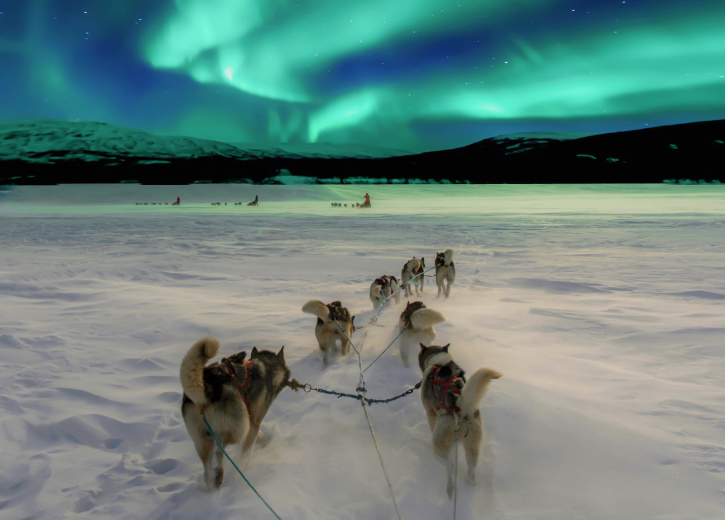
Finnish Lapland has seen particularly strong growth in interest among luxury travelers. The region offers a combination of factors that is difficult to match anywhere else: the Northern Lights phenomenon, the magical silence of old-growth Arctic forest, a rich indigenous Sami cultural heritage, and a range of winter activities in Finnish Lapland from husky safaris to reindeer sleigh rides and ice fishing. The quality of boutique accommodation in the region has also risen significantly, with glass igloo resorts offering a sleeping experience that places guests directly beneath the Aurora Borealis.
Patagonia attracts a different type of remote luxury traveler, one drawn to dramatic mountain landscapes, glaciers, and the raw power of wind and weather at the southern tip of the continent. Iceland’s highlands, accessible only during summer months, offer a landscape of volcanic plateaus, geothermal rivers, and almost total solitude. The Atacama, at high altitude in the driest desert on Earth, offers extraordinary stargazing and a surreal, otherworldly terrain.
What these destinations share is that they offer experiences that cannot be approximated elsewhere. A fox darting across a snow-covered Arctic clearing at dusk, or the Aurora rippling overhead in silence, is not something that can be brought to a traveler. The traveler must go to it.
Is ultra-remote luxury travel sustainable?
Ultra-remote luxury travel can be sustainable, and in many cases it is more sustainable than mass tourism, provided the properties operating in these environments are genuinely committed to low-impact design, local sourcing, and responsible visitor management. The small scale of most remote luxury resorts is itself a structural advantage: fewer guests means less pressure on fragile ecosystems.
The key distinction is between resorts that use sustainability as a marketing claim and those that build it into their operational foundations. Genuine sustainability in a remote luxury context includes geothermal or renewable energy systems, construction with natural and locally sourced materials, waste management practices appropriate to the environment, and active limits on guest numbers to prevent overuse of the surrounding landscape.
There is also a meaningful argument that well-managed remote luxury tourism creates positive incentives for conservation. When a pristine wilderness becomes the primary economic asset of a small community or family-owned resort, the people who depend on it financially become its most committed protectors. The commercial value of an unspoiled sky, an undisturbed forest, or a clean river is a powerful argument against development that would degrade it.
The carbon footprint of long-haul travel to remote destinations is a legitimate consideration, and one that thoughtful travelers are increasingly weighing. The most honest answer is that ultra-remote travel does carry a higher transport footprint than domestic or regional travel. The best remote luxury resorts acknowledge this honestly and compensate through exceptional environmental stewardship at the destination itself, ensuring that the impact of the journey is matched by the quality of the conservation it supports.
For travelers drawn to Arctic travel in Finnish Lapland, choosing a small, family-owned boutique resort built on sustainable principles is one of the most direct ways to ensure that the experience contributes positively to the environment it depends on. Check availability and book your stay to secure your place in one of Lapland’s most sought-after remote luxury retreats.