
Finnish Lapland, and specifically the Saariselkä region, offers the most guaranteed snow cover of any European destination in winter. With snow typically settling from late October and lasting well into April or even May, the region delivers a consistently white winter that few places on the continent can match. Below, we answer the most common questions travellers ask when searching for a truly snow-reliable European destination.
Which part of Europe gets the most reliable snow cover?
Finnish Lapland consistently delivers the most reliable snow cover in Europe, with the northern fell regions around Saariselkä standing out as among the snowiest and most dependable winter destinations on the continent. Unlike many Alpine or Scandinavian resorts at lower elevations, Saariselkä’s northern latitude and sub-zero temperatures ensure that snow arrives early, stays long, and builds to impressive depths throughout the season.
Several factors combine to make this region exceptional. Its position well above the Arctic Circle means temperatures remain consistently below freezing for months at a time, preventing the mid-season thaws that can disrupt snow conditions further south. The surrounding fell landscape, including the vast wilderness of Urho Kekkonen National Park, also channels and preserves snowfall naturally. In April 2020, Saariselkä recorded the deepest snow cover measured anywhere in Finland that winter, reaching 138 centimetres, which gives a sense of just how substantial winter snowfall can be here.
For travellers whose priority is finding a European destination with guaranteed snow in winter, northern Finnish Lapland is the clear frontrunner. It is not a question of hoping for snow, but rather of planning around a winter that is almost certain to deliver it in abundance.
How many months of snow does Finnish Lapland get each year?
Finnish Lapland typically enjoys around six to seven months of snow cover each year, with the snow season in Saariselkä generally running from late October through to late April or early May. This makes it one of the longest continuous snow seasons of any destination in Europe, and one of the most reliable for winter travel planning.
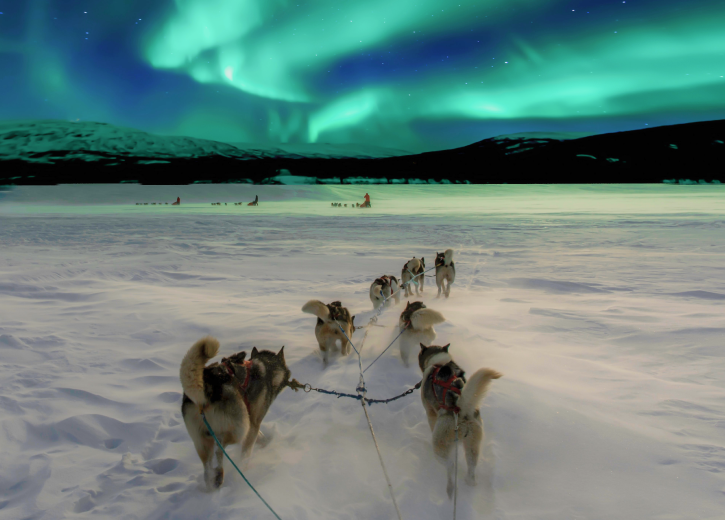
In practical terms, this means that the ski season at Saariselkä is planned to extend from late November all the way through to early May for the 2026 to 2027 winter season. Even outside the core skiing window, the snow-covered landscape remains intact for activities like cross-country skiing, winter hiking, snowmobile excursions, and husky safaris. The spring snow, which often becomes firm and bright under longer daylight hours, is particularly prized by experienced winter travellers who enjoy uncrowded conditions and crisp, clear days.
The longevity of the snow season also means that Finnish Lapland’s snow is not limited to a narrow peak window. Whether you visit in December for the deep midwinter atmosphere, in January or February for the best Northern Lights conditions, or in March and April for spring skiing under the midnight sun, you can expect a white landscape throughout.
What’s the difference between snow reliability in Lapland and the Alps?
The key difference between snow reliability in Finnish Lapland and the Alps is consistency. The Alps can offer spectacular skiing and deep snowfall, but conditions vary significantly by year, by elevation, and by resort. Lapland’s snow reliability is driven by sustained sub-zero temperatures across an entire season, whereas Alpine snow at lower altitudes is increasingly vulnerable to mild spells and rain events, particularly early and late in the season.
Elevation versus latitude
Alpine resorts depend heavily on elevation to guarantee cold enough temperatures for snow to settle and stay. Resorts at lower altitudes in the Alps frequently face rain or slush during warm periods, and early-season or late-season cover can be patchy. High-altitude Alpine skiing can be excellent, but it comes with a narrower reliable window and higher exposure to weather variability. In contrast, Saariselkä’s snow reliability comes from its latitude rather than its altitude. The northern location keeps temperatures consistently low across the entire landscape, not just at the summit of a fell.
Season length and snow depth
The Alps typically offer a reliable ski season from December to March at mid-altitude resorts, with some high-altitude exceptions extending into April or May. Saariselkä’s planned ski season for 2026 to 2027 runs from late November to early May, representing a longer and more predictable window. Snow depths in Lapland also tend to build steadily through the season rather than fluctuating with thaw and refreeze cycles. The snowiest place in Europe for guaranteed winter conditions is not necessarily the highest mountain, but rather the most consistently cold region, and that points firmly to northern Finnish Lapland.
When is the best time to visit Lapland for guaranteed snow?
The best time to visit Finnish Lapland for guaranteed snow is from late November through to April, with each part of the season offering a distinct experience. Snow cover is virtually certain across this entire window, but the character of the visit changes considerably depending on when you travel.
December and January bring the deepest winter atmosphere, with very short days, extraordinary darkness, and the highest probability of witnessing the Northern Lights. The combination of a snow-blanketed landscape and long, clear Arctic nights makes this period particularly magical for aurora hunting. February and March offer a balance of excellent snow conditions and gradually returning daylight, making them popular months for both skiing and outdoor activities. By late March and April, the days lengthen dramatically, the snow remains firm and bright, and the landscape takes on a golden quality as sunlight returns to the fells.
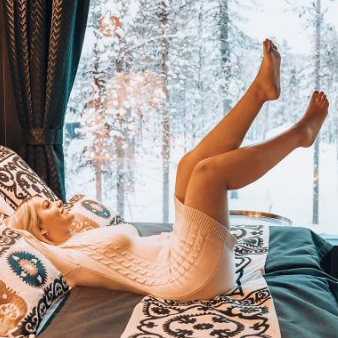
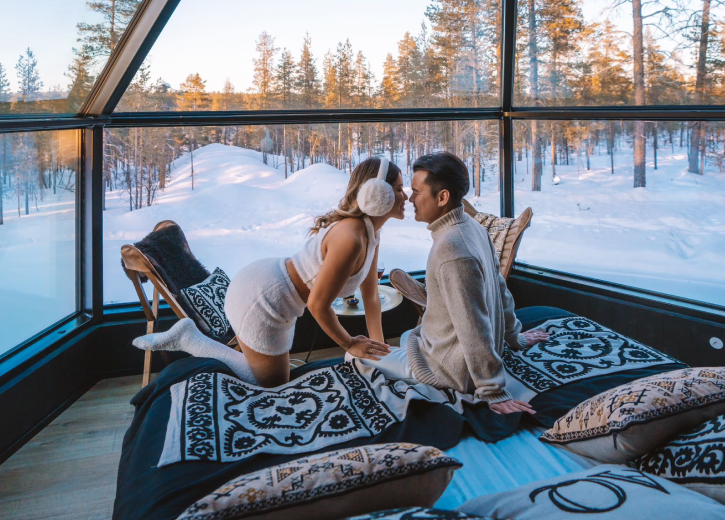
For travellers specifically seeking guaranteed snow in Europe alongside the best Northern Lights viewing conditions, January and February are the sweet spot. Nights are long, skies are frequently clear in this part of Finnish Lapland, and the snow cover is at its most substantial. At Aurora Queen Resort in Saariselkä, our glass-ceiling igloos for aurora viewing are positioned specifically to maximise north-facing sky views, making this period ideal for guests hoping to witness the aurora from the comfort of their bed.
Does Finnish Lapland have snow every year without fail?
Yes, Finnish Lapland receives snow every single year, and the northern fell regions around Saariselkä are among the most snow-reliable places on the entire continent. While no natural environment can be described as completely immune to variation, the combination of high latitude, sustained sub-zero temperatures, and a landscape that preserves snowfall makes a snowless winter in this region essentially unheard of.
What does vary slightly from year to year is the precise timing of the first snowfall and the exact depth at any given point in the season. Some winters see snow arrive in October and build steadily, while others may begin slightly later in November. However, by December, a full white landscape is effectively guaranteed across Saariselkä and the surrounding national park. The ski resort also supplements natural snowfall with snowmaking capabilities and snow fences that collect wind-blown snow, ensuring that slope conditions remain excellent even in years when natural snowfall is slightly below average.
For travellers weighing up the best snow destinations in Europe, this consistency is a significant advantage. Planning a winter trip to Finnish Lapland does not require anxious monitoring of long-range weather forecasts in the way that trips to more southerly destinations sometimes do. The snow will be there. The question is simply which part of the season suits you best.
If a long, reliable, and genuinely immersive snow season is what you are looking for, Finnish Lapland delivers it year after year. We would love to welcome you to Saariselkä, where you can experience the Arctic winter from the warmth of a glass igloo, with the snow-covered wilderness stretching out around you and the Northern Lights dancing overhead. Book your glass igloo stay and discover what a guaranteed white winter truly feels like.