The best time to book a glass igloo in Lapland is as early as possible, ideally six to twelve months before your intended travel dates. Demand for glass igloo accommodation in Finnish Lapland far outstrips supply, particularly during the Northern Lights season from September through March. The sections below answer the most common booking questions in detail, so you can plan your Arctic trip with confidence.
How far in advance should you book a glass igloo in Lapland?
For peak season dates, especially December, January, and February, booking six to twelve months in advance is strongly recommended. Glass igloos are a limited and highly sought-after accommodation type, and the most desirable dates sell out well before the season begins. Shoulder season dates may still be available three to four months out, but earlier is always safer.
The core reason demand is so intense is simple: there are only a small number of glass igloo resorts in Lapland, each with a limited number of units. At Aurora Queen Resort glass igloo options, for example, we have just 17 igloos, which means availability is genuinely finite, and once a date is gone, it is gone. This is not a situation where last-minute deals are common or advisable.
The safest approach is to decide on your preferred travel window first, then book as soon as that decision is made. If you have flexibility on dates, searching mid-week options or early-season dates (September to October) can open up more availability. But if you have a fixed holiday period in mind, particularly Christmas, New Year, or February half-term, treat booking as the very first step in your planning process, not the last.
Which months offer the best conditions for seeing the Northern Lights?
The Northern Lights are visible in Lapland from late August through early April, but the strongest and most reliable aurora activity typically falls between late September and mid-March. During this period, nights are long and dark enough to provide the contrast needed to see the lights clearly, and Lapland’s skies are frequently clear and unpolluted by artificial light.
Within that window, certain months stand out. October and November offer a good balance of darkness, manageable temperatures, and less crowding compared to the Christmas period. January and February are statistically among the darkest months, which maximises viewing hours, though temperatures can drop significantly. March brings a pleasant combination of strong aurora potential and the return of some daylight, which many guests find more comfortable for daytime activities.
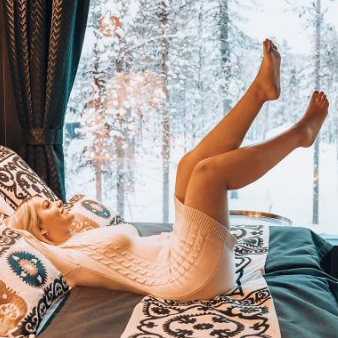
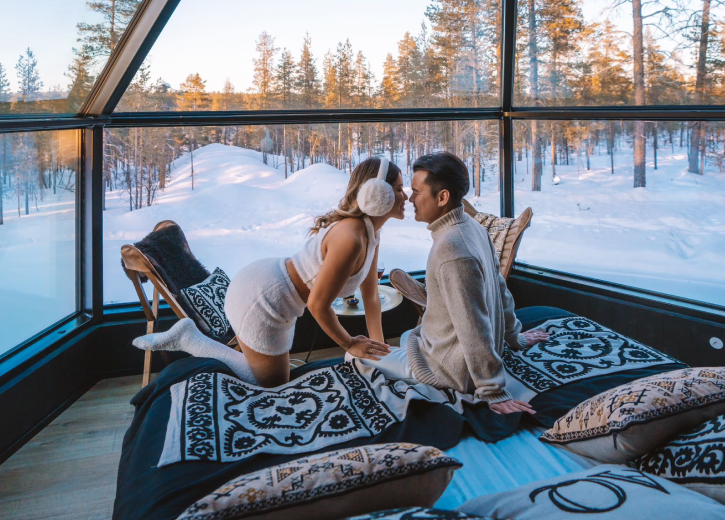
Our resort in Saariselkä is positioned specifically to take advantage of these conditions. The igloos face north, away from any sources of light pollution, and the glass ceilings and panorama windows are designed so that guests can watch the Northern Lights from their beds without stepping outside. That said, aurora activity is a natural phenomenon and cannot be guaranteed on any specific night, the key is to stay for at least two to three nights to maximise your chances.
What is the difference between peak season and shoulder season in Lapland?
Peak season in Lapland runs from mid-December through late February, encompassing the Christmas and New Year holiday period and the busiest part of the winter travel calendar. Shoulder season refers to the quieter periods on either side, typically October to early December, and March to early April. Both offer genuine Northern Lights potential, but they differ significantly in terms of availability, atmosphere, and price.
Peak season: December to February
This is when Lapland is at its most magical and most in-demand. Snow cover is reliable, temperatures are consistently cold, and the festive atmosphere is at its peak. Families, couples, and group travellers all compete for the same limited igloo availability during this window. Prices reflect that demand, and booking well in advance is essential. If Christmas or New Year is your target, begin your search at least nine to twelve months ahead.
Shoulder season: October to November and March to April
Shoulder season offers a quieter, often more affordable alternative without sacrificing the core experience. In October and November, the aurora season is well underway, snowfall begins to settle, and you are far less likely to encounter fully booked dates. March is a favourite among experienced Lapland travellers, days are longer, light conditions are beautiful, and aurora activity remains strong. Shoulder season is also when we tend to have more flexibility for longer stays, which is worth considering if you want to explore the full range of activities Lapland has to offer.
Are there any times of year when glass igloos are not available?
Yes. Glass igloo resorts in Lapland typically operate on a seasonal basis aligned with the Northern Lights and winter experience season. Most resorts, including ours, are open from approximately September through April and close during the summer months. This means glass igloo accommodation in Lapland is generally not available from May through August.
The reason for this is practical as well as experiential. The Northern Lights require darkness to be visible, and Finnish Lapland experiences near-continuous daylight during the summer months, a phenomenon known as the midnight sun. While the midnight sun is a remarkable natural experience in its own right, it is not compatible with the aurora-viewing purpose that glass igloos are designed around. The summer period is also when resorts carry out maintenance, upgrades, and preparation for the coming season.
If you are planning a summer visit to Finnish Lapland, the landscape is genuinely beautiful and the hiking and nature experiences are outstanding, but a glass igloo stay is a winter and autumn experience by nature. Plan accordingly and aim for the September to April window.
Does booking early guarantee a better igloo or just availability?
Booking early primarily guarantees availability, but in practice, that often translates to a better overall experience. When you book well in advance, you have the full selection of available igloos to choose from, which means you can select based on positioning, view, or specific features rather than taking whatever remains. Leaving it late means accepting whatever is left, which may not align with your preferences.
At Aurora Queen Resort, all 17 of our glass igloos with panorama windows are designed with glass ceilings and panorama windows, so every unit offers the core aurora-viewing experience. That said, guests who book early can communicate their preferences, such as wanting an igloo in a particular location within the resort grounds, and we do our best to accommodate those requests. Early bookers also tend to have more flexibility around date selection, which matters when you are trying to align your stay with a specific event, a travel companion’s schedule, or a preferred moon phase for aurora viewing.
In short: booking early does not automatically mean you get a “better” igloo in a hierarchical sense, but it does give you choice, flexibility, and peace of mind, all of which contribute meaningfully to the quality of your experience.
What should you consider when choosing your travel dates?
When choosing your travel dates for a glass igloo stay in Lapland, the most important factors to weigh are aurora probability, snow conditions, your tolerance for cold, and how busy you want the resort to feel. No single date is objectively perfect, the right timing depends on what you are hoping to get out of the trip.
- Aurora probability: The Northern Lights are most reliably visible from late September through mid-March. Aim for a new moon period when possible, as darker skies improve visibility significantly.
- Snow conditions: Reliable snow cover in Saariselkä typically begins in October or November and lasts through March. If a snowy landscape is important to your experience, avoid very early autumn dates.
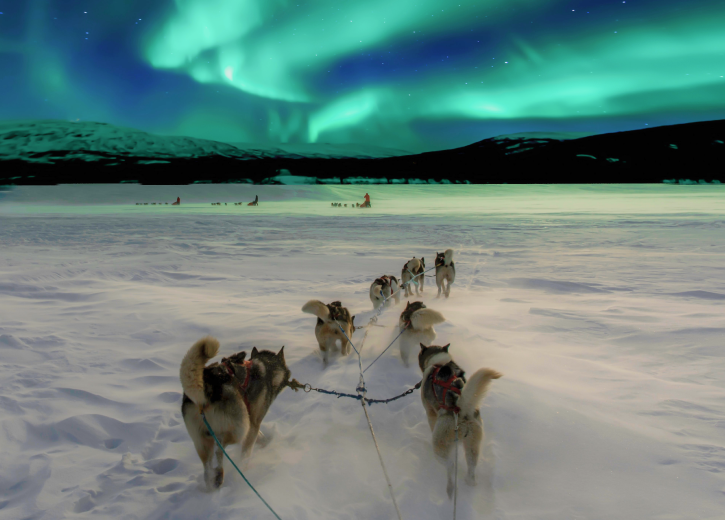
- Temperature: January and February are the coldest months, with temperatures regularly dropping below minus 20 degrees Celsius. March is considerably milder while still offering excellent winter conditions. If you plan to spend time outdoors on activities like husky safaris or reindeer sleigh rides, temperature tolerance is worth factoring in.
- Crowd levels: Christmas and New Year attract the largest number of visitors. If you prefer a quieter, more intimate atmosphere, October, November, or March are excellent alternatives.
- Activity availability: Some activities, such as ice fishing and snowmobile excursions, require sufficient snow and ice formation, which typically occurs from November onwards. If specific activities are a priority, check seasonal availability when planning.
One practical tip: regardless of when you travel, plan for a minimum of two to three nights. Aurora activity is unpredictable, and a longer stay gives you multiple opportunities to see the lights rather than pinning everything on a single night. It also gives you time to fully settle into the rhythm of Arctic life, and that unhurried quality is a large part of what makes a Lapland glass igloo stay so restorative.