
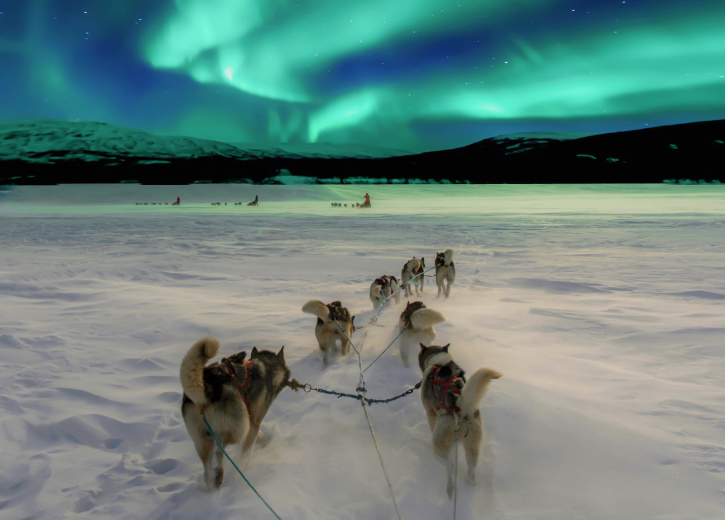
The best time to see the Northern Lights (Aurora Borealis) in Finnish Lapland is from late September to late March, with peak viewing opportunities from December to February. During these winter months, the dark polar nights provide 16+ hours of darkness, significantly increasing your chances of witnessing this natural phenomenon. For optimal viewing, look for clear, dark skies away from light pollution, and plan to stay at least 3-4 nights in the region to account for changing weather conditions.
What is the best time of year to see the Northern Lights in Finnish Lapland?
The Northern Lights season in Finnish Lapland runs from late September to late March, when dark skies create ideal viewing conditions. The prime months are December through February, when the polar night provides nearly round-the-clock darkness and the clearest winter skies typically occur.
The viewing season follows a distinct pattern:
- September-October: Early season with moderate chances. Milder temperatures (around 0°C to -10°C) make outdoor viewing more comfortable, but fewer hours of darkness limit viewing windows.
- November-December: Increasing darkness brings better opportunities. The arrival of kaamos (polar night) in northern Lapland means the sun doesn’t rise above the horizon, creating more viewing hours.
- January-February: Peak aurora season with the highest statistical chance of sightings. These months typically offer the clearest winter skies in Lapland, though temperatures drop to -15°C to -25°C.
- March: Still excellent viewing potential with gradually increasing daylight. Milder temperatures return, making late-night aurora hunting more comfortable.
During midwinter, the extended darkness gives you viewing opportunities from as early as 4 PM until the early morning hours. While the aurora can appear at any time during dark hours, the most active displays often occur between 10 PM and 2 AM.
Each period offers distinct advantages—early and late season provide milder temperatures and beautiful twilight skies that create stunning backdrops for aurora photography, while the deep winter months maximize your statistical chances of witnessing displays with longer potential viewing hours.
What weather conditions are ideal for Northern Lights viewing in Lapland?
Clear, dark skies with minimal cloud cover are essential for Northern Lights viewing in Finnish Lapland. The aurora occurs regardless of weather, but clouds between you and the display will obscure your view, making meteorological conditions the most critical factor for successful aurora hunting.
The ideal viewing conditions include:
- Clear skies: Cloud-free conditions are absolutely crucial. Even partial cloud cover can obscure the lights, so checking local weather forecasts specifically for cloud coverage is essential.
- Darkness: Minimal light pollution dramatically improves visibility. The further you are from city lights, the better your chances of seeing even faint aurora activity.
- Solar activity: The Northern Lights are caused by solar particles colliding with Earth’s atmosphere. Higher KP-index values (a scale measuring geomagnetic activity from 0-9) indicate stronger potential aurora displays.
- Cold, dry air: Winter’s crisp, dry conditions in Lapland often produce the clearest skies. Cold air typically holds less moisture, resulting in better visibility.
Finnish Lapland’s weather patterns create specific viewing advantages. The region experiences stable high-pressure systems during midwinter that bring crystal-clear skies perfect for aurora watching. January and February typically offer the most clear nights statistically, though weather remains unpredictable.
Interestingly, extremely cold nights (-20°C and below) often coincide with clear skies, as these temperatures typically occur during high-pressure systems with minimal cloud formation. This creates a perfect scenario for aurora viewing, provided you’re properly dressed for the conditions.
Local weather patterns in northern Finland can change rapidly, so successful aurora hunters remain flexible, checking forecasts regularly and being prepared to travel to different viewing locations if needed.
How do you maximize your chances of seeing the Northern Lights?
To maximize your chances of seeing the Northern Lights in Finnish Lapland, stay for at least 3-4 nights during the aurora season, monitor aurora and weather forecasts daily, and be prepared to venture out between 10 PM and 2 AM when aurora activity typically peaks.
Follow these practical strategies to improve your aurora hunting success:
- Use aurora forecast tools: Applications and websites like Aurora Service, Space Weather Live, and My Aurora Forecast provide predictions based on solar activity. Look for KP-index values of 3 or higher for good viewing potential in Lapland.
- Check local weather forecasts: Clear skies are essential, so use Finnish Meteorological Institute forecasts to identify nights with minimal cloud cover.
- Plan sufficient time: The aurora is unpredictable—staying 3-4 nights significantly increases your chances compared to a single-night visit. Week-long stays during peak season can offer 70-80% success rates.
- Embrace the night: While aurora can appear anytime during dark hours, activity often peaks between 10 PM and 2 AM. Be prepared for late nights and consider taking afternoon naps during your stay.
- Escape light pollution: Move away from village and town lights. Even small settlements create light pollution that diminishes aurora visibility.
- Develop night vision: Allow 15-20 minutes in darkness for your eyes to adjust fully. Avoid looking at phone screens or torch lights, or use red light mode to preserve night vision.
- Be mobile: Consider joining guided aurora hunting tours with experienced guides who track conditions and can drive to clear sky patches if clouds are present in some areas.
For photographers, preparation is key. Bring a camera with manual settings, a sturdy tripod, and extra batteries (cold temperatures drain them quickly). Use wide-angle lenses with fast apertures (f/2.8 or wider), set ISO between 800-3200, and experiment with exposures between 5-15 seconds.
Remember that aurora activity follows roughly 27-day cycles based on the sun’s rotation, so if strong aurora was reported from Lapland a month ago, there’s an increased chance of activity around the same date the following month.
Where are the best locations in Finnish Lapland to view the Northern Lights?
The best locations for viewing Northern Lights in Finnish Lapland are areas with minimal light pollution, unobstructed northern horizons, and reliable winter conditions. Northern Lapland above the Arctic Circle offers optimal viewing opportunities due to its position under the auroral oval and extended dark periods.
Prime viewing regions include:
- Kilpisjärvi: Located in Finland’s northwestern “arm,” this remote area offers exceptionally dark skies and proximity to the auroral oval, with statistical sighting rates among the highest in Finland.
- Inari-Saariselkä region: This northern area combines excellent aurora conditions with good tourism infrastructure. Lake Inari’s frozen surface provides spectacular open views.
- Muonio-Pallas area: The pristine wilderness and national park create perfect dark-sky conditions away from artificial lights.
- Utsjoki: Finland’s northernmost municipality sits directly under the auroral oval, offering frequent and vibrant displays.
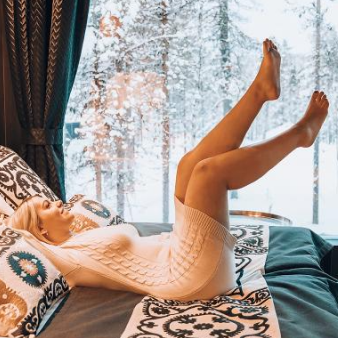
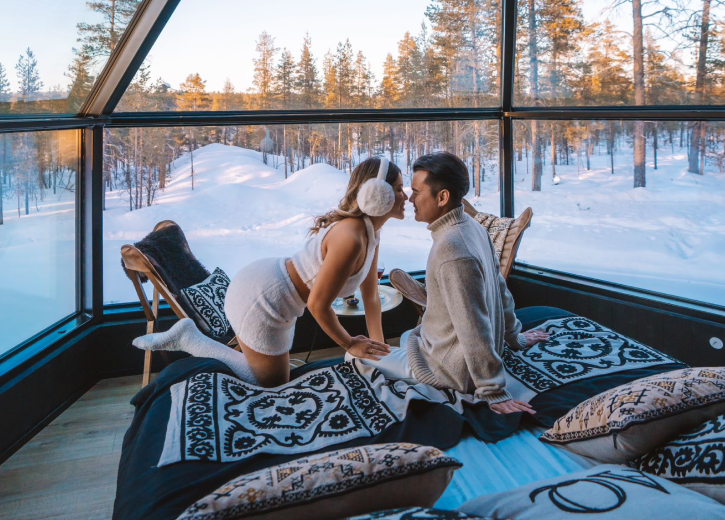
The most memorable aurora viewing experiences often combine comfortable accommodation with prime viewing conditions. Glass-ceiling igloos and panoramic suites in northern Lapland provide the perfect balance—you can watch for the aurora from the warmth of your room, venturing outside when displays appear.
These specialized accommodations place you in dark wilderness locations while providing comfort during the cold winter nights. The ability to keep warm while waiting for the aurora to appear is invaluable during -20°C winter conditions.
For photographers seeking dramatic landscapes with aurora, consider these specific locations:
- Frozen lakes and rivers provide unobstructed northern views and beautiful reflections
- Hilltops and fells offer elevated vantage points above tree lines
- Open marshlands and fields create wide-angle landscape opportunities
- Forest clearings where snow-laden trees (known as tykky in Finnish) create magical foregrounds
Even if staying in a village or small town, you can easily find good viewing spots by driving just 5-10 minutes away from settlement lights. The key is finding locations with clear northern horizons and minimal artificial light.
What should you pack for Northern Lights viewing in Finnish Lapland?
For Northern Lights viewing in Finnish Lapland, pack extreme cold-weather clothing including thermal base layers, multiple mid-layers, and high-quality winter outerwear designed for temperatures between -15°C and -30°C. You’ll also need specialized accessories like hand warmers and insulated boots to stay comfortable during hours of outdoor aurora watching.
Essential clothing items include:
- Base layers: Merino wool or synthetic thermal underwear (both top and bottom) that wicks moisture while retaining heat
- Mid-layers: Fleece or wool jumpers, thermal trousers, and additional insulating layers that trap warm air
- Outer shell: Windproof, water-resistant winter parka and snow trousers rated for extreme cold
- Extremity protection: Insulated, waterproof winter boots rated to at least -30°C, wool socks (pack multiple pairs for layering), insulated mittens (warmer than gloves), and thin liner gloves for operating camera equipment
- Head coverings: Insulated hat covering ears, wool or fleece neck gaiter/balaclava to protect face and neck
For photography equipment, consider:
- Camera with manual settings capability (DSLR or mirrorless)
- Wide-angle lens with fast aperture (ideally f/2.8 or wider)
- Sturdy tripod that functions in extreme cold
- Extra batteries (kept in inside pockets to stay warm)
- Remote shutter release to prevent camera shake
- Headlamp with red light mode to preserve night vision
Additional practical items include:
- Chemical hand and foot warmers
- Thermos with hot beverage
- Portable seat pad (insulated) for comfortable viewing
- Power bank for emergency phone charging
- Aurora forecast app downloaded to your phone
- Small backpack for carrying extra layers and supplies
When dressing for aurora watching, the layering principle is crucial. Multiple thin layers trap warm air more effectively than fewer thick ones, and allow you to adjust your temperature by adding or removing items as needed. The outer layer should block wind completely, as even light breezes dramatically increase the cooling effect in already cold temperatures.
Remember that aurora watching involves periods of limited movement while you stand gazing upward, so you’ll feel the cold more intensely than during active winter activities. Proper preparation ensures you can comfortably enjoy the magical display without being distracted by discomfort.
With the right preparation, equipment and timing, witnessing the Northern Lights dancing across Lapland’s dark winter sky becomes an achievable and unforgettable experience that perfectly complements the magical Arctic environment.
Book Your Northern Lights Adventure Today
Ready to experience the ethereal beauty of the Northern Lights firsthand? The Aurora Queen Resort offers the perfect base for your Lapland adventure, combining luxury accommodations with prime aurora viewing opportunities. Our glass-ceiling suites and expert-guided excursions maximize your chances of witnessing this magical phenomenon while enjoying the comfort and warmth of Finnish hospitality.
Don’t leave your Northern Lights experience to chance. Our strategic location in prime aurora territory, combined with extended stay packages during peak viewing season, provides the optimal conditions for capturing this once-in-a-lifetime spectacle.
Book your Northern Lights holiday now and prepare for an unforgettable Arctic adventure. With limited availability during prime aurora season, early reservation is highly recommended to secure your perfect dates.