
The best time to go skiing in Lapland is broadly between November and May, with the peak season running from late December through April. Finnish Lapland receives reliable snowfall earlier and holds it longer than most European ski destinations, making it one of the most consistent winter sports locations on the continent. The sections below break down the season month by month, cover snow conditions, daylight, skiing styles, and how to combine a ski trip with Northern Lights viewing.
When does the ski season start and end in Lapland?
The Lapland ski season typically runs from late November to early May, spanning roughly five to six months. In higher-elevation areas like Saariselkä, the first reliable snowfall usually arrives in November, and snow cover often persists well into late April or early May. This makes Finnish Lapland one of the longest ski seasons available anywhere in Europe.
The season opens gradually. Early November can be hit or miss, with some years delivering skiable conditions from the first week and others requiring a wait until late in the month. By December, the snowpack is generally well established across most of Lapland. At the other end of the season, April skiing is a genuine pleasure, with spring sunshine, firm morning snow, and temperatures that are cold enough to preserve the slopes but comfortable enough to ski without heavy layering. In a strong snow year, some trails remain open into the first week of May.
For skiers planning around school holidays or popular travel windows, it is worth noting that the Christmas and New Year period, the February half-term weeks, and Easter are the busiest times. Booking accommodation well in advance is essential for these windows, as availability across the region fills quickly.
Which month offers the best snow conditions for skiing?
For the best all-round snow conditions when skiing in Lapland, March is widely considered the sweet spot. By March, the snowpack has been building for several months, meaning depths are at or near their seasonal maximum. Temperatures are still cold enough to keep the snow dry and powdery, yet the days are noticeably longer than in midwinter, giving skiers several hours of natural light on the slopes.
February is also excellent, particularly for those who prefer colder, drier powder conditions and do not mind shorter daylight windows. The snow in February tends to be lighter and fluffier, which suits off-piste and cross-country skiing especially well. January delivers the deepest cold and the most dramatic winter atmosphere, but daylight is limited, which can restrict the hours available for outdoor activity.
April brings a different kind of appeal. The snow surface firms up overnight and softens pleasantly in the afternoon sun, creating what Scandinavian skiers often call spring skiing conditions. Visibility is excellent, the light is beautiful, and the slopes are noticeably quieter than during peak season. For experienced skiers who enjoy varied conditions and a relaxed atmosphere, April is genuinely underrated.
How many daylight hours can skiers expect in Lapland?
Daylight hours in Lapland vary dramatically across the ski season. In December and January, skiers can expect only two to four hours of true daylight, though the twilight periods extend the usable light window somewhat. By March, the days have lengthened considerably, offering around ten to twelve hours of light. April and May bring long, bright days with fifteen or more hours of sunlight.
This variation is one of the most important factors to understand when planning a ski trip to Finnish Lapland. Midwinter visits, while offering the most dramatic Northern Lights conditions, require skiers to be comfortable with low-light or artificial-light skiing. Many resorts in the region illuminate their main runs with floodlights during the polar night period, which creates a unique and memorable atmosphere on the slopes. Skiing under starlit skies with the possibility of Northern Lights overhead is an experience that has no equivalent elsewhere in Europe.
From late February onward, the light returns quickly. The spring equinox in March transforms the landscape, and by April the sun is up for most of the day. Skiers visiting in spring can enjoy both excellent visibility on the slopes and, depending on conditions, still reasonable chances of seeing the Northern Lights in the early evening before midnight.
What types of skiing are available in Finnish Lapland?
Finnish Lapland offers a wide range of skiing disciplines and winter activities to suit all ability levels and preferences. The region is particularly well known for cross-country skiing, but downhill skiing, snowshoeing, and backcountry touring are all well represented across the area.
Cross-country skiing in Lapland
Cross-country skiing in Lapland is a defining activity of the region. The trail networks are extensive, well-maintained, and pass through some of the most beautiful Arctic wilderness in the world. Saariselkä alone has hundreds of kilometres of marked trails ranging from gentle beginner loops to multi-day fell routes. The terrain is varied, the scenery is extraordinary, and the trails are groomed regularly throughout the season. For many visitors, a long cross-country ski through a silent birch forest is the most memorable part of their Lapland trip.
Downhill and resort skiing
Downhill skiing in Finnish Lapland is more modest in scale compared to Alpine destinations, but it has its own distinct character. The fells offer consistent gradients, wide open runs, and a relaxed atmosphere that suits families and intermediate skiers particularly well. Queues are rarely a problem, and the overall experience tends to be unhurried and enjoyable. For advanced skiers seeking steep technical terrain, Lapland is best combined with cross-country or backcountry skiing to round out the trip.
Should you combine skiing with Northern Lights viewing in Lapland?
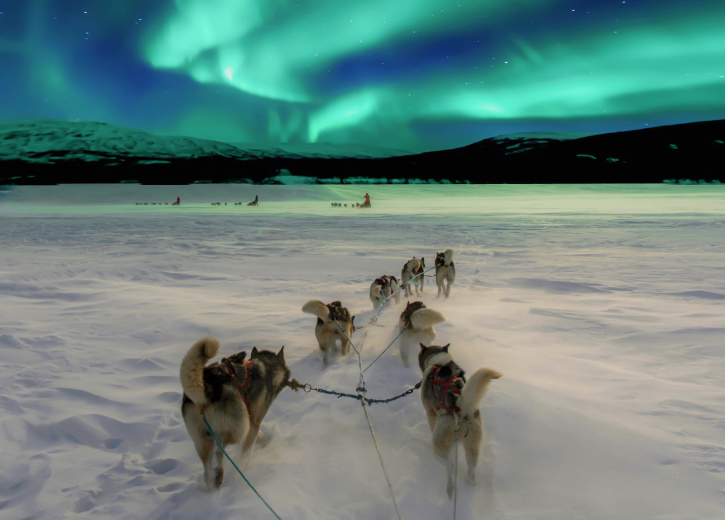
Absolutely. Combining skiing in Lapland with Northern Lights viewing is one of the most rewarding ways to experience Finnish Lapland, and the two activities complement each other naturally. The best window for both is January through March, when snow conditions are excellent and the nights are long and dark enough for strong aurora activity.
The Northern Lights are visible whenever skies are clear and dark enough, which in Finnish Lapland means any night from late August through April in theory. In practice, the period from December to March offers the most reliable combination of good aurora activity and prime skiing conditions. Saariselkä is particularly well positioned for Northern Lights viewing because the area sits far from significant light pollution sources, giving the night sky exceptional clarity.
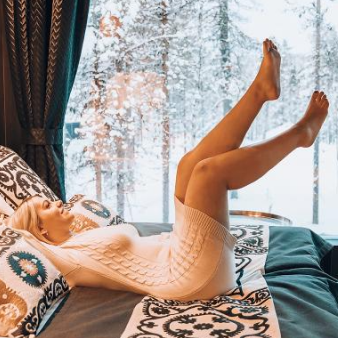
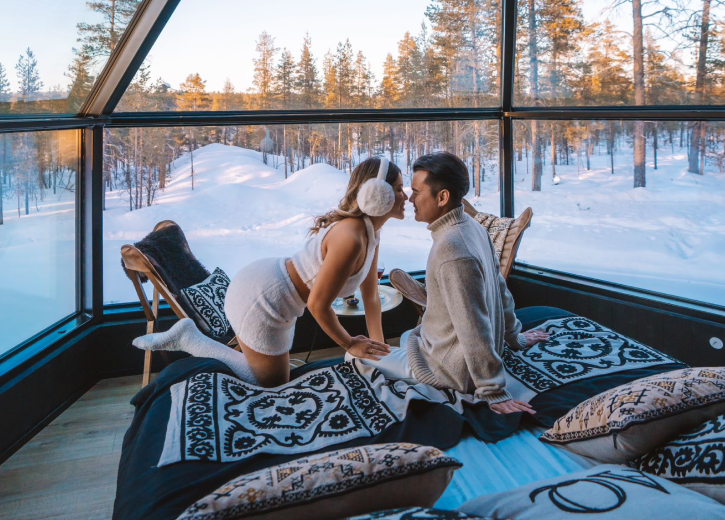
At Aurora Queen Resort, we are based in Saariselkä precisely because of this combination of factors. Our glass-ceiling igloos for Northern Lights viewing allow guests to watch the Northern Lights from bed after a day on the slopes, and we offer guided Aurora hunting excursions for those who want to venture out into the wilderness for the best possible views. Pairing active days on skis with the quiet wonder of the aurora overhead makes for a genuinely complete Arctic experience.
How cold does it get on the slopes in Lapland?
Temperatures on the slopes in Finnish Lapland typically range from minus 5°C to minus 20°C during the main ski season, with occasional colder spells dropping below minus 25°C in January and February. Wind chill can make the perceived temperature feel significantly lower, so layering and wind-resistant outerwear are essential.
January and February are the coldest months, with average temperatures in the minus 12°C to minus 18°C range across much of Lapland. These temperatures are manageable with proper clothing, and the dry Arctic air actually makes extreme cold feel less biting than damp cold at lower latitudes. Most skiers find that the right base layers, a quality mid-layer, and a windproof outer shell keep them comfortable across a full day on the slopes.
March and April warm up noticeably. Daytime temperatures in March often hover around minus 5°C to minus 10°C, which most skiers find ideal. April can bring temperatures close to zero or slightly above during the afternoon, making spring skiing genuinely comfortable even in lighter kit. Whatever month you visit, it is worth checking the forecast before heading out and adjusting layers accordingly. Rental shops and local guides across the region are well equipped to advise on appropriate clothing for the conditions on any given day.