
In 2026, high-end travelers choosing an Arctic experience prioritize a combination of authentic natural immersion, genuine comfort, and meaningful sustainability. They want to witness the Northern Lights from a warm, beautifully designed space, engage in curated wilderness activities, and feel that their presence supports rather than harms the environment they have traveled so far to experience. The questions below unpack each dimension of what makes a luxury Arctic trip truly exceptional this year.
What do high-end travelers prioritize when choosing an Arctic destination?
High-end travelers choosing an Arctic destination in 2026 prioritize three things above all: unobstructed access to natural phenomena like the Northern Lights, accommodation that delivers genuine comfort without compromising immersion, and a sense of exclusivity that mass-market resorts simply cannot offer. The destination itself must feel remote and unspoiled, yet logistically accessible.
Beyond the headline experience of seeing the aurora borealis, discerning travelers increasingly research the quality of the surrounding darkness. Light pollution is a genuine concern, and those who have done their homework specifically seek out locations far from urban centers where clear, ink-dark skies are the norm rather than the exception. Finnish Lapland, and Saariselkä in particular, consistently attracts this kind of traveler precisely because of how reliably pristine its night skies are.
Luxury Arctic travelers also weigh the intimacy of a property heavily. A small boutique resort with a limited number of suites signals attentive, personalized service in a way that a large hotel simply cannot replicate. The ability to enjoy near-silence, to move through a landscape without crowds, and to feel genuinely looked after rather than processed through a system is what separates a memorable Arctic journey from a merely expensive one.
Finally, ease of access matters more than many travelers expect. The Arctic conjures images of extreme remoteness, and while that remoteness is part of the appeal, the most sought-after destinations balance true wilderness with practical connectivity. Direct flight connections through major airports and reliable ground transfers are quiet but important factors in the final booking decision.
Why are glass igloos the most sought-after Arctic accommodation?
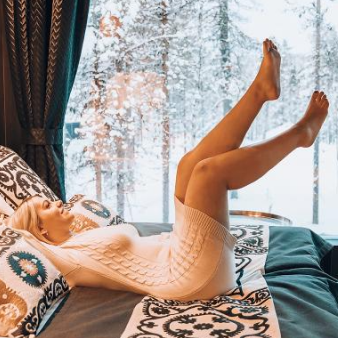
Glass igloos have become the defining symbol of luxury Arctic travel because they solve a fundamental tension: the desire to sleep beneath the Northern Lights while remaining warm, comfortable, and private. A well-designed glass igloo with a panorama ceiling and full-width windows delivers total immersion in the Arctic night sky without requiring guests to brave subzero temperatures outdoors.
The appeal goes beyond practicality, though. There is something genuinely extraordinary about lying in a warm bed, looking directly up through a glass ceiling at a sky shifting with green and violet light. It is an experience that no photograph fully prepares you for, and that no other accommodation format replicates. This is precisely why glass igloos consistently appear at the top of luxury travel wish lists, and why demand for them continues to grow year on year.
Design quality separates good glass igloos from great ones
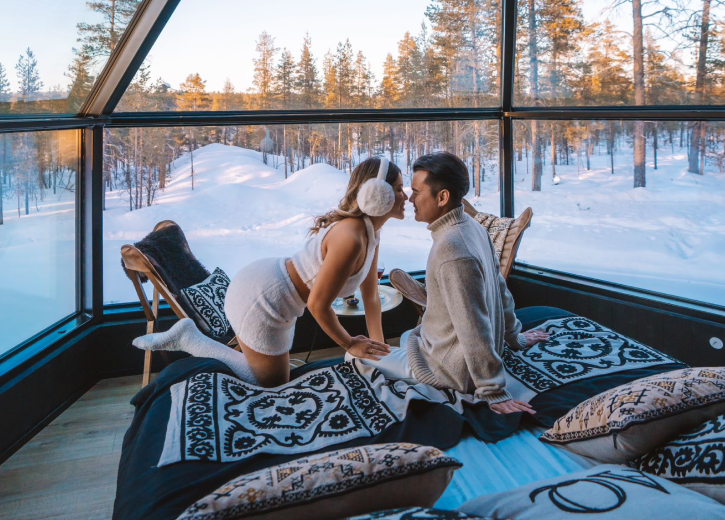
Not all glass igloos are created equal. The most sought-after examples combine structural thoughtfulness with interior refinement. Panorama windows that extend from floor to ceiling, heated floors, premium bedding, and private en-suite bathrooms are the baseline expectations for a high-end guest. Interiors that draw on Scandinavian design principles, using natural materials, clean lines, and carefully chosen textures, elevate the experience from novelty to genuine luxury.
At Aurora Queen Resort, our 17 glass-ceiling igloos are built from solid wood and designed to maximize sky views from every angle. Every detail, from the heated floors to the quality of the bathroom fittings, is chosen with the understanding that guests are paying for an exceptional experience, not simply a memorable photograph.
Location within the property matters as much as the igloo itself
The orientation of a glass igloo is critical. Northern-facing positioning maximizes exposure to the aurora corridor, and properties that have thought carefully about this during construction give their guests a measurably better chance of witnessing the lights. Equally, the positioning of individual igloos within a resort affects privacy and the sense of solitude. The best properties ensure that guests cannot see directly into a neighboring igloo, preserving the feeling of having the wilderness entirely to themselves.
What role does sustainability play in luxury Arctic travel decisions?
Sustainability has moved from a secondary consideration to a genuine deciding factor for high-end Arctic travelers in 2026. Affluent travelers are increasingly aware that the landscapes they travel to see are fragile, and they actively seek out properties that demonstrate a credible, embedded commitment to environmental responsibility rather than surface-level greenwashing.
In the Arctic context, this takes on particular urgency. The landscapes, the wildlife, and the atmospheric conditions that make Lapland so extraordinary are directly vulnerable to the effects of climate change. Travelers who are serious about the environment want to know that the resort they are staying at is part of the solution, not a contributor to the problem.
Concrete choices matter here. Geothermal heating, the use of locally sourced and sustainably harvested timber, responsible waste management, and menus built around local ingredients are the kinds of decisions that resonate with environmentally conscious luxury travelers. We use geothermal energy to heat our igloos and chose solid wood construction throughout, not as a marketing decision but as a reflection of what it means to genuinely respect the environment we are privileged to call home.
Sustainability also intersects with the quality of the experience itself. A resort that protects its surrounding wilderness from light pollution and noise is simultaneously making an environmental choice and a hospitality choice. The two are inseparable in the best Arctic properties.
What experiences do affluent Arctic travelers expect beyond accommodation?
Affluent Arctic travelers expect a curated programme of experiences that connect them meaningfully with the landscape and culture of the region. Accommodation, however spectacular, is only part of the equation. The activities on offer, and how thoughtfully they are organized, determine whether a trip feels genuinely transformative or simply visually impressive.
The most valued experiences tend to fall into a few distinct categories.
- Aurora hunting excursions: Guided trips into the wilderness to find the clearest skies and the best vantage points for Northern Lights viewing. These go beyond simply stepping outside and looking up, involving knowledgeable guides who understand the local geography and atmospheric conditions.
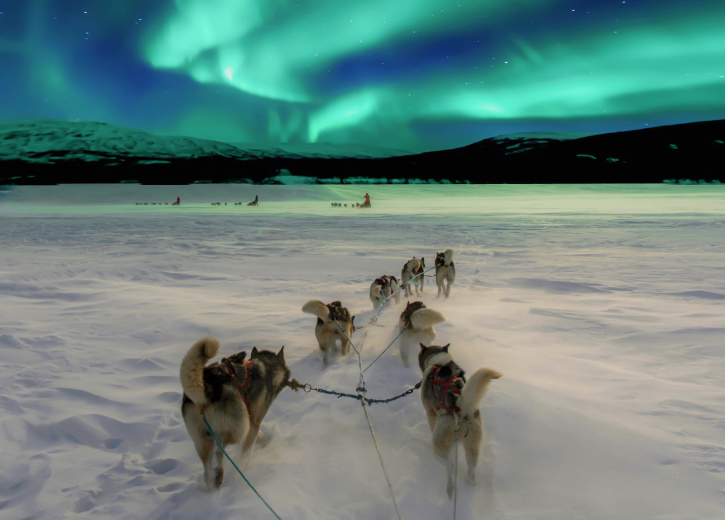
- Husky safaris: One of the most viscerally thrilling ways to travel through an Arctic landscape, with the added dimension of a genuine relationship with the animals. High-end travelers appreciate safaris that prioritize animal welfare and offer a real sense of adventure rather than a short, choreographed loop.
- Reindeer experiences: Visits to working reindeer farms and reindeer sleigh rides connect guests to the indigenous Sami culture of Lapland in a way that feels authentic rather than performative.
- Ice fishing: A meditative, culturally rooted activity that appeals to travelers seeking quiet engagement with the Arctic environment.
- Cross-country skiing: For guests who want physical engagement with the landscape, guided cross-country skiing through old-growth forests and open fell terrain is an experience unavailable anywhere else in the world.
What distinguishes a luxury activity programme from a standard one is not the number of options but the quality of the guiding, the attention to small details, and the sense that each experience has been designed for someone who values depth over novelty. The best Arctic resorts curate rather than simply list their activities.
How does remoteness and silence factor into the luxury Arctic appeal?
Remoteness and silence are not incidental features of a luxury Arctic experience — they are core to why high-end travelers choose it over other destinations. In a world of constant connectivity and urban noise, the profound quiet of the Arctic wilderness is itself a luxury that money cannot easily replicate elsewhere. The absence of crowds, traffic, and artificial sound is, for many guests, the most restorative part of the entire trip.
This is a significant shift in how luxury travel is understood. For much of the twentieth century, luxury was associated with abundance: more staff, more amenities, more entertainment. Contemporary high-end travelers, particularly those who already have access to material comfort in their daily lives, increasingly define luxury as the presence of what is rare. Deep silence, genuinely dark skies, and the feeling of being alone in a vast landscape are rare in the modern world, and therefore genuinely valuable.
Saariselkä sits in one of the most sparsely populated regions of Europe, within easy reach of Urho Kekkonen National Park. The surrounding fell landscape offers a quality of silence that is almost physical in its intensity. Guests who arrive expecting to be impressed by the Northern Lights often find that the silence itself leaves the deeper impression.
For resort operators, this means that protecting the acoustic and visual environment of a property is as important as the quality of the interiors. Light pollution from the resort itself, noise from neighboring facilities, and overcrowding all undermine the very thing that draws luxury travelers to the Arctic in the first place. Keeping a property small and intentional is not just a business model; it is a commitment to the experience.
When is the best time to visit Lapland for a luxury Northern Lights experience?
The best time to visit Lapland for a luxury Northern Lights experience is between late September and late March. This window offers the combination of sufficient darkness and cold, clear skies that aurora viewing requires. The peak months for most travelers are November through February, when nights are longest and the aurora season is at its most reliable.
Within this window, different periods offer meaningfully different experiences.
Autumn (late September to November)
The early season brings the first snows, rapidly lengthening nights, and a landscape in transition that many guests find especially beautiful. Temperatures are cold but not extreme, and the combination of snow-dusted birch forests and dark skies creates an atmosphere that feels genuinely otherworldly. Aurora activity begins in earnest from late September onward, and this period tends to attract travelers who prefer slightly smaller crowds and a quieter atmosphere.
Midwinter (December to February)
Midwinter is the most popular period for a reason. Nights in Saariselkä can stretch to eighteen hours or more, maximizing the window for Northern Lights viewing. The landscape is deeply snow-covered, all winter activities are fully operational, and the atmosphere of the Arctic is at its most complete. December in particular draws travelers combining a Northern Lights experience with a festive escape. Temperatures can drop significantly, but the right resort will ensure guests are warm and comfortable throughout.
Late winter (March)
March offers a compelling alternative for those who want Northern Lights viewing combined with more daylight hours for outdoor activities. Snow conditions are typically excellent, days are noticeably longer than in midwinter, and the light quality during the golden hours of early morning and late afternoon is extraordinary. It is a particularly good choice for guests who want to balance aurora hunting with skiing, snowshoeing, or longer husky safaris.
Regardless of when you visit, the single most important factor in Northern Lights viewing is sky clarity. A resort positioned away from light pollution sources, in a region with a high proportion of clear nights, gives guests the best possible chance of witnessing the aurora in its full glory. Choosing the right location matters at least as much as choosing the right month.