
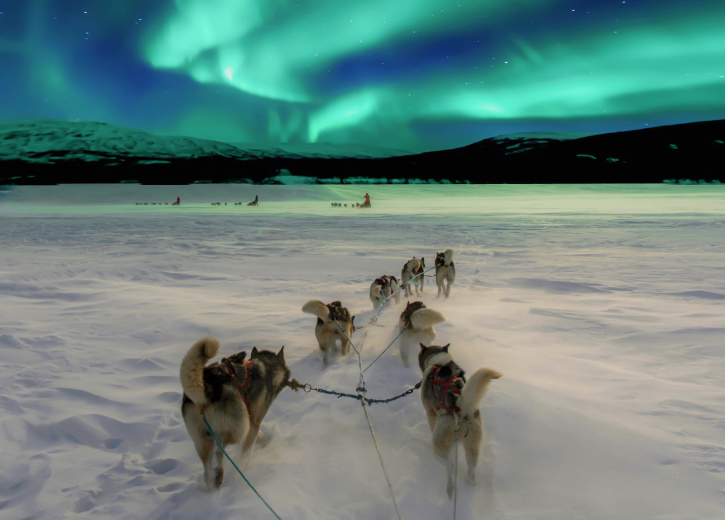
The dancing curtains of emerald and violet that sweep across Lapland’s night sky have captivated humans for millennia. These ethereal displays—the northern lights—represent one of nature’s most magnificent spectacles. While many travellers journey to Finnish Lapland hoping to witness this phenomenon, truly experiencing the aurora borealis requires more than luck. The pristine wilderness of northern Finland offers some of the world’s finest aurora viewing opportunities, but navigating this vast landscape after dark demands local knowledge and expertise. Through guided minivan journeys into the Arctic night, visitors can enhance their chances of witnessing this celestial dance while staying comfortable in Lapland’s winter conditions.
The elusive magic of the northern lights: Why timing and expertise matter
The aurora borealis occurs when charged particles from the sun collide with gases in Earth’s atmosphere, creating luminous displays that typically appear in polar regions. While this scientific explanation sounds straightforward, actually viewing the northern lights involves numerous variables that must align perfectly. Weather conditions in Lapland can change rapidly, with cloud cover frequently obscuring otherwise brilliant displays. Additionally, light pollution from even small settlements can significantly diminish visibility, making knowledge of remote viewing locations essential.
Successful aurora hunting requires understanding both celestial and terrestrial factors. Solar activity varies in 11-year cycles, with different intensities of aurora displays corresponding to these patterns. Even during peak solar activity, the lights typically appear between 10 pm and 2 am, requiring patience and proper timing. Lapland’s position in the “aurora zone”—a band that circles the Earth at high latitudes—makes it ideal for viewing, but local knowledge remains crucial. Professional guides continuously monitor space weather forecasts, cloud patterns, and local conditions to determine optimal viewing opportunities each night. Their expertise allows them to predict when and where conditions might be clearest, significantly increasing your chances of witnessing this natural phenomenon compared to independent attempts.
What makes minivan aurora journeys the ideal viewing experience?
The key advantage of aurora hunting via minivan lies in mobility. Unlike stationary viewing, where visitors must hope for clear skies above a fixed location, guided minivan journeys allow participants to chase optimal conditions across a wide geographical area. Professional guides continuously communicate with each other and monitor real-time weather data, allowing them to navigate away from cloud cover and toward clearer skies—often making the difference between seeing nothing and witnessing spectacular displays.
Minivans provide the perfect balance between mobility and comfort in Lapland’s challenging winter environment. They can access remote locations far from light pollution while offering shelter from temperatures that regularly drop below -20°C. These vehicles can navigate narrow forest roads to reach pristine viewing spots inaccessible to larger tour buses, yet provide a warm haven where guests can rest between aurora appearances. The intimate setting of small-group minivan tours also creates opportunities for meaningful conversations with knowledgeable guides who share insights about local culture and natural phenomena while waiting for the lights to appear. This combination of mobility, comfort, and expertise makes minivan aurora journeys particularly effective for maximising viewing opportunities during limited holiday time in Lapland.
Our guided aurora journey experience: From preparation to sighting
A thoughtfully planned aurora hunting journey begins before you even step into the minivan. The experience typically starts with an informative briefing where guides explain the science behind the northern lights and set realistic expectations for the evening ahead. Quality providers equip guests with thermal outerwear when needed, ensuring everyone remains comfortable during outdoor viewing opportunities. The most thorough experiences include warm beverages and light refreshments to maintain energy levels throughout the night-time adventure.
Once underway, the journey becomes a blend of science, strategy, and immersion in Lapland’s nocturnal wilderness. Guides make real-time decisions based on weather radar data and colleagues’ reports from different areas, sometimes travelling 50-100 kilometres to find optimal viewing conditions. During drives between potential viewing spots, they share knowledge about Lapland’s unique environment and culture. When promising conditions appear, the group stops in carefully selected locations—often beside frozen lakes or in forest clearings—that offer unobstructed views of the northern horizon. Guides provide assistance with camera settings for those wishing to photograph the experience, while also ensuring everyone has the opportunity to simply experience the wonder of the aurora without technological distractions. This methodical approach to aurora hunting transforms what could be a frustrating experience of uncertainty into an enriching journey through Lapland’s winter landscape, regardless of whether the lights make an appearance.
Beyond the lights: What to expect on your nighttime Lapland adventure
While the northern lights remain the primary objective, guided minivan journeys offer numerous additional experiences that make the adventure worthwhile regardless of aurora conditions. Lapland’s night sky, far from urban light pollution, reveals a spectacular canopy of stars rarely visible in more populated regions. Professional guides help identify constellations and planets while explaining their significance in traditional Sámi culture. This connection between celestial phenomena and indigenous wisdom adds depth to the experience beyond mere sightseeing.
The wilderness itself transforms after dark, revealing a different character than during daylight hours. Winter nights in Lapland offer unusual sensory experiences—the crunch of snow underfoot that sounds almost musical in the still air, the scent of pine forests in the crisp cold, and occasionally, glimpses of nocturnal wildlife. Foxes sometimes make appearances along forest edges, their red coats striking against the snow. Depending on the season, you might experience different natural phenomena: the blue twilight of early winter, when the sun barely sets; the deep darkness of mid-winter when stars shine with remarkable clarity; or the gradually lengthening days of late winter when sunset colours linger for hours. Throughout the journey, guides share stories of local traditions and survival in the Arctic environment, creating a cultural immersion that complements the natural experience. These elements combine to create a multifaceted adventure that remains memorable even when the northern lights prove elusive.
How to prepare for your aurora hunting journey in Lapland
Proper preparation significantly enhances the aurora hunting experience. Dressing appropriately is essential—layering remains the key strategy for Lapland’s winter conditions. Start with thermal base layers (preferably wool or synthetic materials that wick moisture), add an insulating mid-layer, and finish with a windproof, insulated outer layer. Particular attention should be paid to extremities: thermal socks, insulated boots, quality gloves, and a hat that covers the ears will make extended periods outdoors comfortable rather than challenging. While many tour providers offer thermal overalls and boots, wearing your own base and mid-layers ensures personal comfort.
For photography enthusiasts hoping to capture the northern lights, specific equipment preparations are valuable. A camera with manual settings capabilities, a sturdy tripod, spare batteries (which drain quickly in cold temperatures), and knowledge of appropriate settings (typically starting with ISO 1600, f/2.8-4, and 15-30 second exposures) will set you up for success. However, consider spending at least part of your viewing time simply observing with the naked eye—the human experience of the aurora differs significantly from photographs, with subtle colours and movements that cameras often miss. Timing your visit strategically also improves chances of successful viewings. The period from late September through March offers the darkest skies, with January and February typically providing the clearest winter nights. Planning your outing during the new moon phase further enhances visibility by eliminating lunar light interference. With proper preparation and realistic expectations—understanding that the northern lights remain a natural phenomenon never guaranteed—you’ll be well-positioned to make the most of your Lapland aurora adventure, creating memories that last long after your journey concludes.
Discover More Lapland Adventures
While the northern lights may be the crowning jewel of Lapland’s winter offerings, the region boasts a wealth of additional activities that complement your aurora hunting experience. From exhilarating husky safaris and reindeer sleigh rides to peaceful snowshoeing expeditions through pristine forests, there’s something to satisfy every traveler’s sense of adventure. These daytime experiences not only create a well-rounded Lapland journey but also provide fascinating insights into local culture and traditions that enhance your understanding of this remarkable Arctic region.
Click here to explore our full range of activities and create your perfect Lapland itinerary. Whether you’re seeking adrenaline-pumping excitement or peaceful communion with nature, our diverse offerings ensure unforgettable memories beyond the aurora.