
Witnessing the aurora borealis dancing across the Arctic sky remains one of nature’s most breathtaking spectacles, yet many visitors to northern regions return home disappointed. The difference between a successful aurora viewing experience and a missed opportunity often comes down to understanding the science, timing your visit strategically, and positioning yourself in the right location with proper preparation. Whether you’re planning your inaugural northern lights adventure or hoping to improve upon previous attempts, maximising your chances requires more than simply showing up during winter months. This guide combines scientific knowledge with practical strategies to help you experience the magic of the aurora borealis, covering everything from geomagnetic activity patterns to the importance of geographical positioning above the Arctic Circle, where Finland’s northern Lapland offers some of the most reliable viewing conditions on Earth.
Understanding aurora borealis science and viewing conditions
The northern lights occur when charged particles from the sun collide with gases in Earth’s atmosphere, creating luminous displays that ripple across the night sky. Solar wind carries these particles towards our planet, and when geomagnetic storms intensify this flow, the likelihood of visible aurora activity increases dramatically. Understanding this fundamental process helps explain why aurora viewing isn’t simply a matter of looking skyward on any clear winter night.
The KP index measures geomagnetic activity on a scale from 0 to 9, with higher numbers indicating stronger aurora potential. For locations above the Arctic Circle, even modest KP levels of 2-3 can produce visible displays, whilst lower latitudes require stronger geomagnetic storms. Solar cycles, which peak approximately every 11 years, influence overall aurora frequency, though spectacular displays can occur during any phase of the cycle when solar wind conditions align favourably.
Atmospheric conditions play an equally crucial role in successful viewing. Cloud cover represents the primary obstacle, as even the most intense aurora activity remains hidden behind overcast skies. Temperature inversions can occasionally create localised clear patches, which is why monitoring real-time weather patterns becomes essential. The aurora oval—a ring-shaped zone around the magnetic poles where aurora activity concentrates—expands during stronger geomagnetic storms, bringing displays to lower latitudes whilst intensifying visibility in polar regions.
Moon phases also affect viewing quality, as bright moonlight can wash out fainter aurora displays. However, during periods of strong activity, the northern lights shine brilliantly enough to overcome lunar interference, creating opportunities throughout the lunar cycle for those positioned in optimal viewing locations.
When and where to position yourself for optimal viewing
Northern Finland’s position above the Arctic Circle creates an extended aurora season stretching from late August through early April, with peak viewing probability occurring between September and March. Statistical patterns show that September and March often deliver particularly active displays, as equinox periods coincide with increased geomagnetic disturbances. December and January offer the longest periods of darkness, providing more hours each night when aurora viewing becomes possible.
Monthly probability patterns reveal important considerations for trip planning:
- September: Darker nights return after summer’s midnight sun, with relatively mild temperatures and autumn colours providing daytime activities in Lapland
- October-November: Increasing darkness hours and stable weather patterns, though early winter storms can affect visibility
- December-January: Maximum darkness with only brief daylight periods, creating extended viewing windows throughout the night
- February-March: Improving weather stability with strengthening solar activity as spring approaches
Geographical positioning requires careful consideration of several factors. Latitude determines your proximity to the aurora oval, with locations above 66°N offering significantly higher probability than southern regions. Northern Lapland’s positioning provides consistent access to this optimal viewing zone throughout the winter season.
Light pollution dramatically reduces aurora visibility, making distance from urban centres essential. Even small towns can create enough artificial light to diminish fainter displays. The most successful viewing locations combine northern latitude with minimal light interference, allowing your eyes to adjust to darkness and perceive the full spectrum of aurora colours. Horizon visibility matters considerably, as aurora displays often begin low on the northern horizon before expanding overhead during stronger activity.
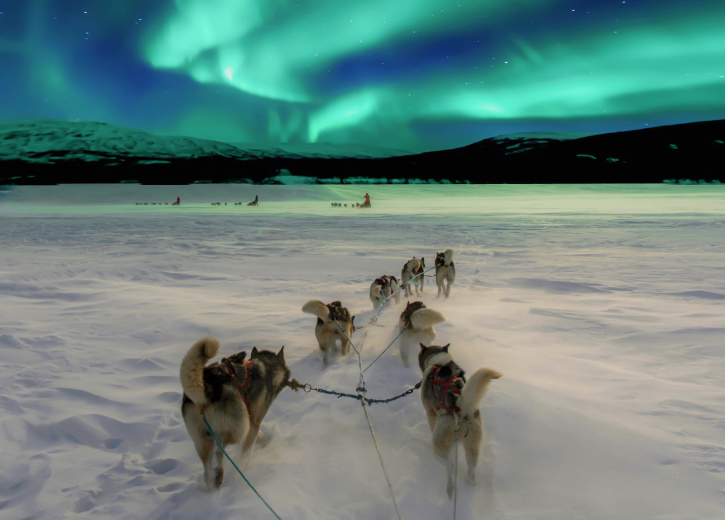
Activities in Lapland extend beyond aurora viewing, with winter offering opportunities for husky sledding, snowmobiling, and experiencing traditional Sámi culture. Planning your days around these pursuits whilst reserving evenings for aurora watching creates a balanced Arctic adventure that maximises your time in this remarkable region.
Essential preparation strategies for aurora hunting success
Successful aurora viewing begins with monitoring forecast tools and prediction services that track solar wind data and geomagnetic activity. The Finnish Meteorological Institute provides localised aurora forecasts, whilst international services offer 3-day predictions based on solar observation satellites. These tools cannot guarantee displays with absolute certainty, but they identify nights with elevated probability, allowing you to plan outdoor time strategically.
Weather assessment requires checking both cloud cover predictions and current satellite imagery. Conditions can shift rapidly in Arctic regions, with clear skies developing unexpectedly even when forecasts suggest clouds. Real-time weather radar helps identify approaching systems and potential viewing windows between fronts.
Clothing preparation for extended outdoor viewing in sub-zero temperatures cannot be overstated. Layering systems that include thermal base layers, insulating mid-layers, and windproof outer shells provide essential protection. Extremities lose heat rapidly, making insulated boots rated for Arctic conditions, warm gloves, and proper headwear non-negotiable. Many visitors underestimate how cold standing still outdoors becomes after 30 minutes at -20°C, even when they’ve felt comfortable during active daytime pursuits.
Photography equipment benefits from cold-weather preparation, including spare batteries kept warm in interior pockets, as lithium batteries drain quickly in freezing temperatures. Tripods with stable footing on snow and ice enable the long exposures necessary for capturing aurora displays.
Your accommodation location significantly influences viewing success by eliminating the need to travel during active aurora periods. Staying in aurora-optimised locations with unobstructed northern sky views means simply stepping outside when activity begins, rather than driving through dark, icy roads whilst precious viewing time passes. Some travellers choose to join guided tours that provide transportation to remote viewing locations. For those seeking a comfortable approach, experienced guides monitor conditions and handle logistics whilst sharing their knowledge of Arctic skies and local phenomena. This option suits visitors who prefer not to navigate unfamiliar winter roads independently or who value expert interpretation of what they’re witnessing.
What to expect during your northern lights experience
Setting realistic expectations enhances your northern lights experience by preparing you for the natural variability of aurora displays. Activity levels fluctuate considerably, ranging from faint greenish glows barely visible to the naked eye through to vibrant curtains of light that pulse and dance across the entire sky. Duration patterns vary equally, with some displays lasting mere minutes whilst others continue for hours with varying intensity.
Colour perception depends on both aurora intensity and human eye sensitivity. Green remains the most commonly observed colour, produced by oxygen molecules at lower altitudes. During stronger displays, red hues appear at higher altitudes, whilst nitrogen creates blue and purple tones. Cameras often capture colours more vividly than human eyes perceive them, particularly fainter reds and purples, which is why photographs sometimes appear more dramatic than the live experience.
The aurora borealis follows no schedule, appearing when solar wind conditions and atmospheric factors align unpredictably. Patience and multiple viewing opportunities significantly increase your chances of witnessing memorable displays.
Movement characteristics range from gentle undulations to rapid flickering and dramatic corona formations that appear to radiate from directly overhead. Understanding that each display presents unique patterns helps you appreciate whatever nature offers on a given night, rather than expecting every viewing to match dramatic photographs you’ve seen.
Statistical probability strongly favours multi-night stays for aurora viewing. Whilst spectacular displays occasionally occur on single nights, weather patterns and geomagnetic activity create natural variability that makes three to five nights in the viewing zone far more likely to yield successful sightings. This approach allows you to experience different activity levels and weather conditions, increasing both your chances and your understanding of aurora behaviour.
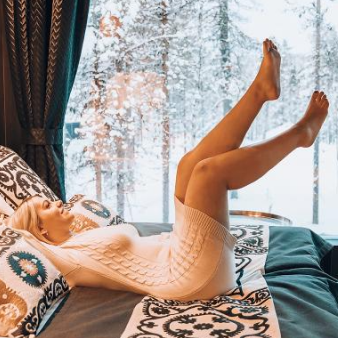
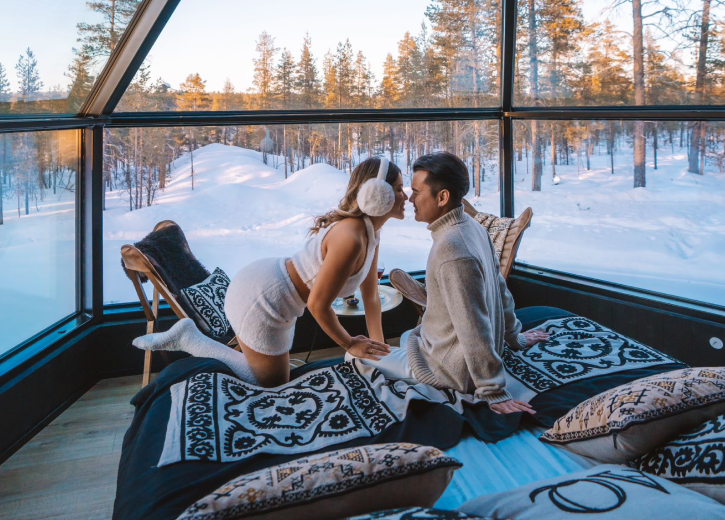
Comfortable viewing environments allow for sustained observation during periods when aurora timing remains unpredictable. Rather than enduring hours outdoors in extreme cold, accommodation options such as Aurora Queen Resort provide heated spaces with panoramic sky views, enabling you to watch for activity whilst remaining warm. Glass-ceiling structures designed specifically for aurora viewing eliminate the need to choose between comfort and optimal positioning, allowing you to observe the northern sky continuously without exposure to Arctic temperatures. This approach particularly suits families with children, older travellers, or anyone who finds extended periods in sub-zero conditions challenging.
The northern lights represent a natural phenomenon shaped by solar physics and atmospheric science rather than human schedules. Embracing this unpredictability whilst maximising your viewing opportunities through strategic timing, optimal positioning, and proper preparation creates the foundation for a successful aurora borealis experience in northern Finland’s Arctic wilderness.