
To find a snow-guaranteed winter resort in Europe, head north, specifically to Arctic destinations in Finnish Lapland, northern Norway, or Swedish Lapland, where reliable snow cover typically arrives in November and lasts well into April or even May. The further north you travel, the longer and more consistent the winter season becomes. The questions below break down exactly what to look for, how to compare your options, and what to expect when you arrive.
Which European regions have the most reliable snowfall in winter?
The most snow-reliable regions in Europe are found above the Arctic Circle, particularly in Finnish Lapland, northern Norway, and northern Sweden. These destinations benefit from consistently sub-zero temperatures throughout winter, meaning snowfall accumulates and stays rather than melting between weather systems. At lower latitudes, even alpine ski resorts can struggle with inconsistent snowfall, especially at lower elevations.
Finnish Lapland stands out as one of the most dependable options. Destinations like Saariselkä, located deep in northern Lapland, regularly record some of the deepest snow covers in Finland. In April 2020, Saariselkä recorded a snow depth of 138 centimetres, the deepest measured anywhere in Finland that winter. That kind of accumulation is the result of a long, cold season where sub-zero temperatures lock snow in place from early winter through to late spring.
Scandinavian mountain ranges along the Norwegian-Swedish border also offer strong snow reliability, particularly at altitude. However, coastal proximity can introduce milder air and rain at lower elevations. For guaranteed snow rather than just probable snow, the sub-Arctic and Arctic interior regions consistently outperform alpine destinations further south.
Central European ski resorts in the Alps, Pyrenees, or Carpathians can deliver excellent conditions in a good year, but they are increasingly vulnerable to warmer winters and shorter snow windows at mid-range elevations. If snow reliability is your primary criterion, northern Lapland is the most dependable choice in Europe.
What does ‘snow-guaranteed’ actually mean at a resort?
A snow-guaranteed resort is one where natural snow cover is reliably present throughout the intended winter season, not just occasionally or under ideal conditions. In practice, this means the resort sits at a latitude or altitude where temperatures stay consistently below freezing for months, and where historical snowfall patterns make poor snow conditions the exception rather than the rule.
It is worth understanding that no resort can literally guarantee snow in a legal or meteorological sense. What the term signals is a track record of dependable winter conditions. Resorts that market themselves as snow-reliable typically back this up with one or more of the following:
- Northern or high-altitude location that sustains sub-zero temperatures for extended periods
- Long documented snow seasons, often running five to six months
- Snowmaking infrastructure to supplement natural snowfall on slopes
- Snow fences and terrain management to capture and redistribute wind-blown snow
In Saariselkä, for example, the planned skiing period for the 2026 to 2027 season runs from late November through to early May. That length of season is only possible because natural conditions are cold and stable enough to sustain it, supported where needed by snowmaking and snow fences on the slopes. For a non-skiing Arctic winter resort, snow reliability means something slightly different, it is about the landscape being consistently blanketed in white throughout your stay, which shapes everything from the atmosphere to the activities available.
How far in advance should you book a winter resort in Europe?
For popular winter destinations in Lapland and the broader Arctic region, booking six to twelve months in advance is strongly recommended, particularly for peak periods such as Christmas, New Year, and the Northern Lights season from late January through March. Boutique and luxury properties with limited capacity sell out well ahead of these windows.
The further in advance you book, the more choice you retain, both in terms of accommodation type and travel dates. For a destination like Saariselkä, where the number of high-quality igloo properties in Lapland is limited by design, early booking is not just advisable but often essential. Waiting until autumn to book a Christmas or February stay frequently means finding your preferred option already full.
That said, the shoulder months of the winter season, early December and April into early May, can offer more availability and often lower prices while still delivering excellent snow conditions. If your travel dates are flexible, booking three to four months ahead for these periods is usually sufficient. For the most sought-after dates, treat six months as your minimum lead time and twelve months as the comfortable target.
What’s the difference between a ski resort and an Arctic winter resort?
A ski resort is primarily built around downhill skiing infrastructure, lifts, groomed pistes, ski schools, and slope-side accommodation. An Arctic winter resort, by contrast, is centred on the broader experience of the Arctic landscape, including the Northern Lights, wilderness activities, and immersion in nature. Snow is essential to both, but the purpose and atmosphere are quite different.
What a ski resort prioritises
Ski resorts are engineered for on-slope performance. The quality of the runs, the lift system, the après-ski culture, and the concentration of skiers and snowboarders define the experience. Many ski resorts are busy, social environments with a strong emphasis on daytime activity and evening entertainment. Saariselkä is notable for being the northernmost ski resort in Europe, sitting on the fells of Kaunispää and Iisakkipää, and it combines genuine skiing infrastructure with the wider appeal of an Arctic destination.
What an Arctic winter resort prioritises
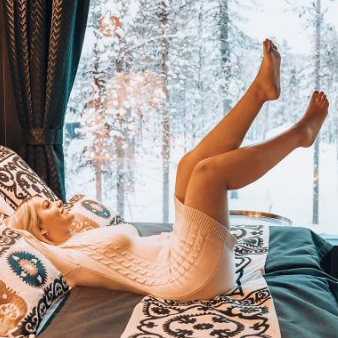
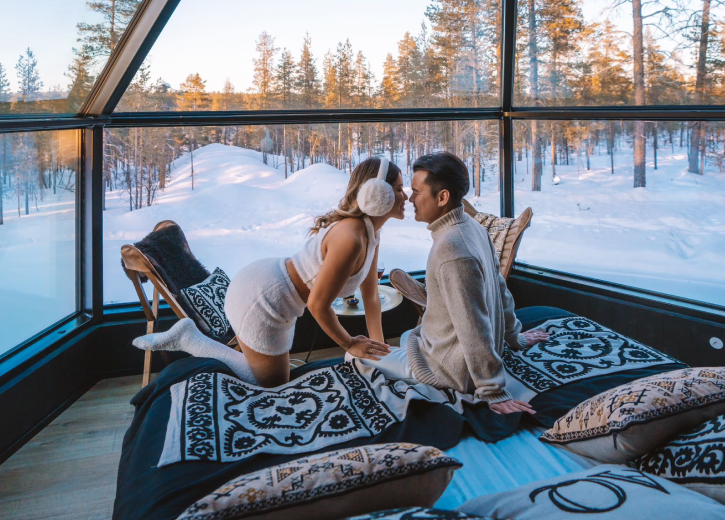
An Arctic winter resort places the wilderness experience at the centre. The draw is the silence, the snow-laden landscape, the chance to see the Northern Lights, and activities that connect you directly with the Arctic environment, husky safaris, reindeer sleigh rides, ice fishing, and Aurora hunting. Accommodation at this type of resort is often designed to maximise your connection with the natural surroundings, with glass ceilings and panorama windows that let you watch the night sky without stepping outside. We built Aurora Queen Resort glass igloo accommodation around exactly this philosophy, placing guests inside the landscape rather than simply near it.
Many travellers find the ideal winter trip combines both, a destination like Saariselkä offers skiing on the fells during the day and the full Arctic experience in the evenings and on rest days.
What activities can you do at a snow-guaranteed winter resort?
At a snow-guaranteed winter resort in the Arctic, the activity programme extends well beyond skiing. The reliable snow cover and frozen wilderness create conditions for a wide range of experiences that simply are not possible in destinations with unpredictable winters. Most guests find they have more to do than they have time for.
Common activities at an Arctic winter resort include:
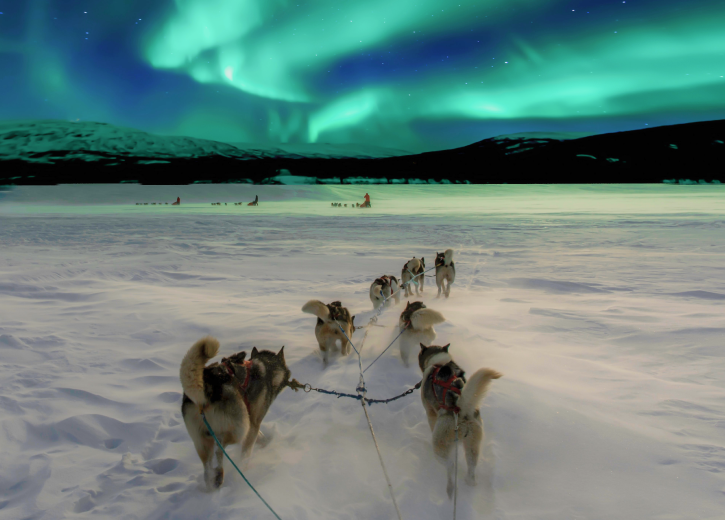
- Husky safaris – travelling through snow-covered forest trails by dog sled, one of the most iconic Lapland experiences
- Reindeer farm visits and sleigh rides – meeting reindeer and learning about the Sámi herding culture that has shaped this landscape for centuries
- Aurora hunting – guided excursions into dark, open terrain to maximise your chances of seeing the Northern Lights
- Ice fishing – drilling through lake ice and fishing in conditions of remarkable stillness
- Cross-country skiing – exploring fell and forest terrain on trails that wind through national park landscapes
- Snowmobile excursions – covering greater distances across the Arctic wilderness
- Winter hiking – walking through snow-covered national park terrain, often in near-total silence
The surrounding landscape matters enormously here. In Saariselkä, Urho Kekkonen National Park begins directly adjacent to the resort area, opening up vast, protected wilderness for exploration. The park’s fell and forest terrain provides a dramatic backdrop for almost every activity on the list above, and the absence of light pollution makes it one of the best places in Europe to witness the Northern Lights. On a clear night, a fox crossing the snow or the shimmer of the Aurora overhead can feel genuinely otherworldly.
How do you choose the right snow-guaranteed resort for your trip?
Choosing the right snow-guaranteed resort comes down to matching the destination’s character to what you actually want from your trip. Start by asking whether your priority is skiing, wilderness immersion, Northern Lights viewing, or a combination of all three, the answer shapes every other decision.
Key factors to evaluate when comparing options:
- Snow season length – how many months does reliable snow cover last? Destinations with seasons running from November to May give you far more flexibility than those with a narrower window.
- Latitude and light pollution – for Northern Lights viewing, you need dark skies as much as you need snow. Resorts positioned away from towns and light sources dramatically improve your chances.
- Accommodation style – do you want a large hotel with full amenities, or an intimate boutique experience? Glass igloo resorts offer a qualitatively different stay compared to standard hotel rooms, particularly for Aurora viewing.
- Activity programme – check that the resort or its partners offer the specific activities you want, whether that is skiing, husky safaris, or guided Aurora tours.
- Accessibility – how straightforward is the journey? Some Arctic destinations require multiple connections; others, like Saariselkä, are served by Ivalo Airport with direct bus connections to the resort area.
- Sustainability credentials – if eco-conscious travel matters to you, look for resorts that use renewable energy, locally sourced materials, and responsible land management.
If snow reliability and a long winter season are among your most important criteria, Finnish Lapland, and Saariselkä in particular, consistently ranks among the most compelling options in Europe. The combination of deep, dependable snow, national park wilderness, and some of the darkest skies on the continent makes it a destination that delivers on its promise across a wide range of travel styles.
If you are ready to experience the Arctic winter from the inside out, book a glass igloo in Saariselkä and wake up to the Northern Lights without ever leaving the warmth of your bed.