Finns celebrate Christmas Eve in Lapland with a rich blend of ancient customs and cosy family traditions, centred around the home and the surrounding winter wilderness. In Finland, Christmas Eve — known as Jouluaatto — is the main celebration day, not Christmas Day, and Lapland adds a layer of magic that no other region in the country can match. Below, we unpack the key traditions, the food, the atmosphere, and what makes a Lapland Christmas Eve genuinely unforgettable.
What traditions take place on Christmas Eve in Finland?
Finnish Christmas Eve traditions revolve around family gatherings, a visit to the sauna, a candlelit trip to the cemetery to honour loved ones, and the arrival of Joulupukki, the Finnish Father Christmas. The day follows a familiar rhythm that has remained largely unchanged across generations, blending Lutheran customs with older folk practices rooted in the land.
The morning often begins quietly, with families preparing food and decorating the home. By early afternoon, many Finns head to a church service, followed by the beloved tradition of visiting the local cemetery to light candles on the graves of family members. This act of remembrance gives Finnish Christmas Eve a reflective, emotionally resonant quality that sets it apart from many other European celebrations.
The sauna is central to the day. Traditionally, the whole family bathes together in the late afternoon before the evening meal, a ritual that is both practical and deeply symbolic. Clean in body and spirit, the family then gathers at the table for the Christmas feast.
Later in the evening, Joulupukki arrives, either in person or on a neighbourhood visit, to deliver gifts directly to children. Unlike in many countries where presents appear mysteriously overnight, in Finland the gift-giver often knocks on the door and hands out packages personally, asking children whether they have been good.
Why is Christmas Eve the main celebration day in Finland?
Christmas Eve is the main celebration day in Finland because Finnish tradition, rooted in Lutheran and Nordic folk customs, marks the start of a holiday at sundown the day before. This means that Christmas begins on the evening of the 24th of December, making that evening the emotional and ceremonial heart of the entire season.
This pattern is common across Scandinavia and the Nordic countries. The concept of the eve as the primary celebration is an old one, predating Christianity in the region, and was absorbed into Christian practice over centuries. For Finns, the 25th and 26th of December are quieter days of rest, visiting extended family, and enjoying leftovers, but the 24th carries the greatest weight.
The concentration of traditions on a single evening, including the sauna, the meal, the cemetery visit, and the arrival of Joulupukki, creates an intensity of feeling that makes Christmas Eve in Finland feel both intimate and significant. It is a day when the whole country seems to slow down and turn inward.
What do Finns traditionally eat on Christmas Eve?
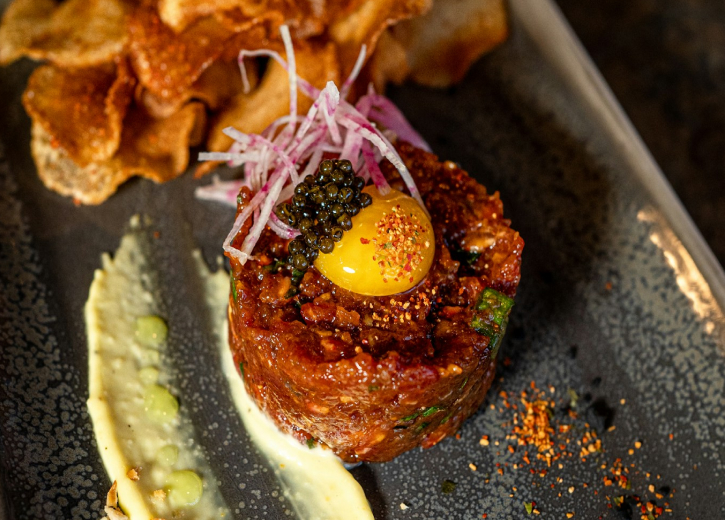
The traditional Finnish Christmas Eve meal, known as joulupöytä, centres on a spread of warming, hearty dishes that reflect the country’s agricultural and coastal heritage. The star of the table is Christmas ham, or joulukinkku, slow-roasted and often glazed with mustard. Alongside it, Finns serve a range of casseroles made from root vegetables, the most distinctive being lanttulaatikko (swede casserole), porkkanalaatikko (carrot casserole), and perunalaatikko (potato casserole).
Lutefisk, a cured whitefish dish, also appears on many tables, particularly in more traditional households, as do gravlax and pickled herring. These fish dishes reflect Finland’s long relationship with both its coastline and its inland lakes.
For dessert, joulutorttu are a must: star-shaped pastries filled with prune jam, dusted with icing sugar, and served warm. Glögi, a spiced mulled wine made with blackcurrant juice, cloves, cinnamon, and cardamom, is the drink of the season, served hot with raisins and almonds floating in the cup.
In Lapland, the same core dishes appear, but local ingredients often add a regional flavour. Reindeer meat, prepared as a stew or served thinly sliced, is a common addition to the Christmas table in the north, reflecting the deep cultural connection between the Sámi people, the land, and its animals.
How does Christmas Eve feel different in Lapland compared to southern Finland?
Christmas Eve in Lapland feels fundamentally different from southern Finland because of the landscape, the darkness, and the snow. In the south, a white Christmas is hoped for but not guaranteed. In Lapland, the ground has typically been covered in deep snow since October, and by Christmas Eve the region sits in a period of near-total polar night, called kaamos, where the sun barely rises above the horizon, if at all.
This darkness is not oppressive. It is soft and blue, and it transforms the landscape into something otherworldly. Snow-laden pine trees, frozen rivers, and the silence of the Arctic wilderness create an atmosphere that feels genuinely removed from everyday life. The contrast between the cold, dark outdoors and the warmth of a lit interior becomes especially vivid on Christmas Eve.
Lapland is also where the mythology of Joulupukki feels most alive. The Finnish Father Christmas is said to live on Korvatunturi, a fell in Finnish Lapland, and the region has long been associated with the origin of the Christmas gift-giver. Walking outside on Christmas Eve in Lapland, with reindeer grazing nearby and the sky overhead deep with stars, it is easy to understand why.
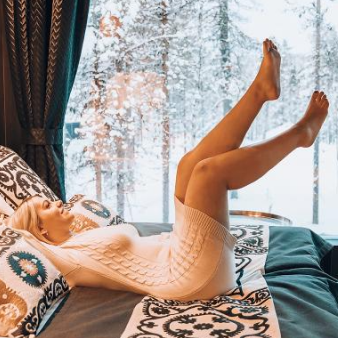
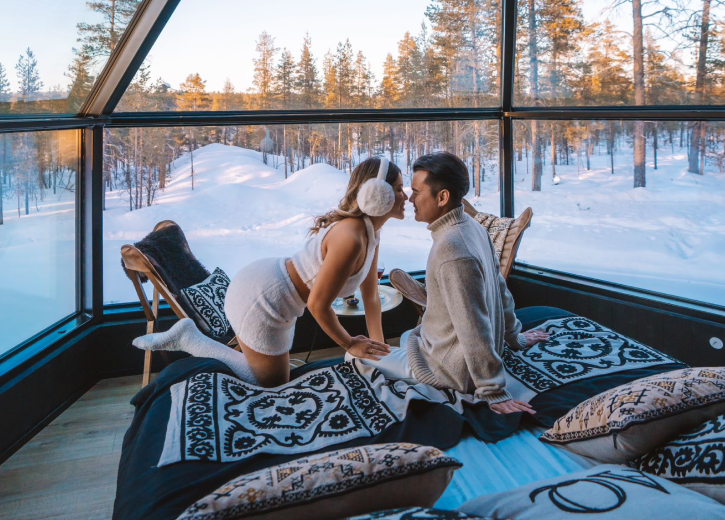
For visitors staying in a glass igloo resort in Saariselkä, Christmas Eve in Lapland takes on an extra dimension. Lying in bed and watching the dark sky through a glass ceiling, surrounded by nothing but snow and silence, is a genuinely rare experience. At Aurora Queen Resort, we design our igloos precisely for this kind of immersion, so that guests can feel fully present in the Arctic night without sacrificing warmth or comfort.
What outdoor activities do people do on Christmas Eve in Lapland?
On Christmas Eve in Lapland, many people take a walk or ski through the snowy landscape before the evening meal, and some families visit a reindeer farm or go on a short snowshoe trek. The day is generally kept calm and unhurried, with outdoor time used to connect with the winter environment rather than pursue high-energy activities.
A short walk through a snow-covered forest in the early afternoon, when the sky turns a deep shade of violet and the birch trees stand white and still, is a tradition in itself for many Lapland residents and visitors. The quiet is remarkable. Sound travels differently in cold, dry Arctic air, and the absence of wind on a clear Christmas Eve can make the landscape feel completely hushed.
Some visitors choose to take a reindeer sleigh ride in the late afternoon, a gentle and deeply atmospheric way to move through the landscape as darkness falls. Others go cross-country skiing along lit trails, with lanterns marking the route through the forest. Ice fishing is another popular option for those who want to spend time on a frozen lake in the cold and the calm.
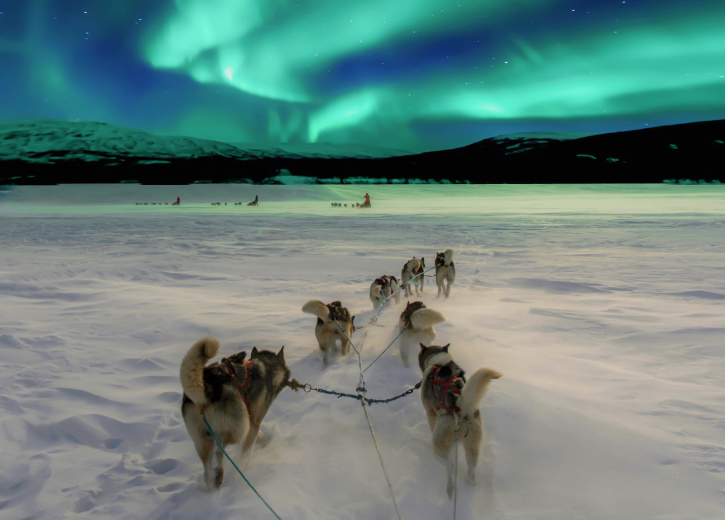
For those staying with us at Aurora Queen Resort, we offer a range of guided activities including husky safaris, reindeer farm visits, and Aurora hunting excursions that can be arranged around the Christmas Eve schedule. These experiences are a wonderful way to spend the afternoon before returning to the warmth of the resort for the evening.
Can you see the Northern Lights on Christmas Eve in Lapland?
Yes, Christmas Eve in Lapland is one of the best times of year to see the Northern Lights. Late December falls within the peak Aurora season, and the long polar nights mean that darkness lasts for most of the day, giving the lights a wide window to appear. Clear skies and low light pollution are the key factors, both of which Saariselkä reliably offers.
The Northern Lights, or revontulet as they are called in Finnish, meaning fox fires, are caused by solar particles interacting with the Earth’s atmosphere. The name comes from an old Finnish folk legend in which a fox runs across the sky, its tail brushing the fells and sending sparks of light upward into the darkness. Seeing them on Christmas Eve, with snow on the ground and the night completely still, is an experience that stays with people for a lifetime.
Aurora activity cannot be guaranteed on any specific night, as it depends on solar conditions that change day to day. However, staying in Lapland for several nights across the Christmas period significantly increases your chances. Saariselkä sits well above the Arctic Circle and away from major sources of light pollution, making it one of the most reliable locations in Finland for Aurora sightings.
Staying in a glass-ceiling igloo means you do not need to stand outside in the cold to watch. At Aurora Queen Resort, our igloos are positioned with optimal northern-facing views, so guests can watch the lights from bed, warm and comfortable, as the sky shifts and dances overhead. It is, without question, one of the most memorable ways to spend Christmas Eve in Finnish Lapland.