
Yes, you can absolutely see the northern lights in Saariselkä. Situated around 250 kilometres north of the Arctic Circle, Saariselkä sits in one of Finland’s darkest and most light-pollution-free corners, making it one of the best places in the world to witness the aurora borealis. The questions below cover everything you need to know to maximise your chances of a sighting.
When is the best time to see the northern lights in Saariselkä?
The best time to see the northern lights in Saariselkä is from late August through early April, when nights are dark enough for the aurora to be visible. The peak season runs from September to March, with the darkest and longest nights occurring around the winter solstice in December. Statistically, clear, cold nights in autumn and late winter offer some of the most rewarding conditions.
During the polar night period, which in Saariselkä lasts from late November to mid-January, the sun does not rise above the horizon at all. This means that even during daytime hours, the sky remains dark enough for aurora activity, dramatically increasing the number of hours per day when a sighting is theoretically possible.
Late August and early September are worth considering if you prefer milder temperatures alongside your aurora hunting. The nights are already dark by then, and the autumn colours of the fell landscape add an extra layer of beauty to the experience. By contrast, February and March bring colder, more stable weather patterns that often produce the clear skies aurora watchers rely on.
How often do the northern lights appear in Saariselkä?
In Saariselkä, the northern lights appear on a significant proportion of clear nights during the aurora season. Finnish Lapland sits directly beneath the auroral oval, the ring-shaped zone around the magnetic pole where geomagnetic activity is most intense. On nights with good solar wind conditions and clear skies, the probability of seeing at least some aurora activity is genuinely high.
It is worth understanding that the aurora is not a fixed event on a schedule. Its appearance depends on solar activity, which follows roughly an 11-year cycle. We are currently in Solar Cycle 25, which reached its solar maximum around 2025, meaning geomagnetic activity in 2026 remains elevated. This translates into more frequent and more vivid aurora displays than you might expect in quieter solar periods.
On a practical level, guests staying for three or more nights in Saariselkä during the dark season stand a strong chance of witnessing the lights at least once, assuming a few clear nights fall within their stay. Staying longer simply increases the odds.
What conditions do you need to see the northern lights?
To see the northern lights in Saariselkä, you need three things to align: darkness, clear skies, and sufficient solar activity. All three must be present simultaneously. If any one of them is missing, even a strong aurora display will be invisible to the naked eye.
Here is what each condition means in practice:
- Darkness: The aurora is faint enough that even moderate light pollution can wash it out. Saariselkä’s remote location, far from any major towns, means the night sky here is genuinely dark. Arriving during the aurora season (late August to early April) ensures you have sufficient darkness.
- Clear skies: Cloud cover is the most common reason people miss the northern lights even when strong activity is occurring. Checking weather forecasts and aurora forecast and availability options regularly during your stay is essential. Cold, high-pressure weather systems tend to bring the clearest skies.
- Solar activity (Kp index): The Kp index measures geomagnetic activity on a scale of 0 to 9. In Saariselkä, even a Kp of 1 or 2 can produce visible aurora on a clear night, thanks to the location’s high latitude. Stronger events with a Kp of 4 or above produce dramatic, colourful displays that fill the sky.
Patience is also a genuine requirement. The aurora can appear and disappear within minutes, or it can dance across the sky for hours. Staying up past midnight and keeping an eye on the northern horizon significantly improves your chances, as aurora activity often peaks in the late evening and around midnight.
Can you see the northern lights from inside a glass igloo?
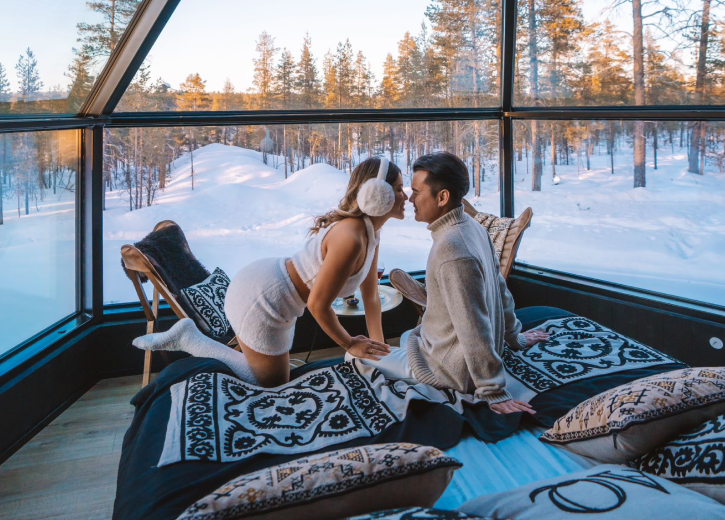
Yes, you can see the northern lights from inside a glass igloo, and for many travellers, this is the most magical way to experience them. Glass igloos with panoramic ceiling views are designed specifically for this purpose, with glass ceilings and panorama windows that give you an unobstructed view of the night sky while you remain warm and comfortable inside.
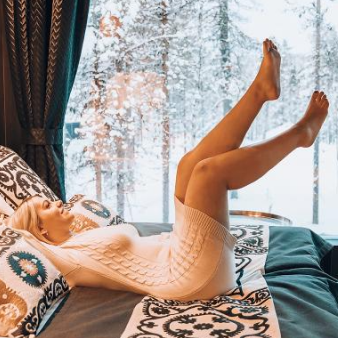
At Aurora Queen Resort, our glass-ceiling igloos are positioned with northern-facing views and are located well away from light pollution sources, ensuring that when the aurora appears, you have the clearest possible sightline. You can watch the lights move and shift directly from the warmth of your bed, without needing to dress for the cold or head outside.
This matters more than it might initially seem. Aurora hunting in Finnish Lapland during winter means facing temperatures that can drop well below minus 20 degrees Celsius. The ability to watch from inside a heated, comfortable space means you can stay alert and patient for far longer than you could while standing outside in the cold. It also means you won’t miss a display because you were asleep or had given up and gone indoors.
That said, stepping outside on a clear night adds its own dimension to the experience. The silence of the Arctic wilderness and the open sky above the fells create an atmosphere that is genuinely unlike anything else.
What should you do if the northern lights don’t appear?
If the northern lights don’t appear during your stay in Saariselkä, there is still an enormous amount to experience. Saariselkä is one of Finland’s most well-rounded Arctic destinations, offering a full range of winter activities and Arctic experiences and natural landscapes that stand on their own merits regardless of aurora activity.
Here are some ways to make the most of your time:
- Join an Aurora hunting excursion: Guided tours take you away from any residual light sources and into the open fell landscape, where guides monitor forecasts in real time and know the best vantage points. This actively improves your chances compared to waiting passively.
- Explore Urho Kekkonen National Park: Saariselkä sits at the gateway to Finland’s second largest national park. Well-marked trails, wilderness huts, and vast open fell terrain make it one of the most rewarding places in Finland for snowshoeing and cross-country skiing.
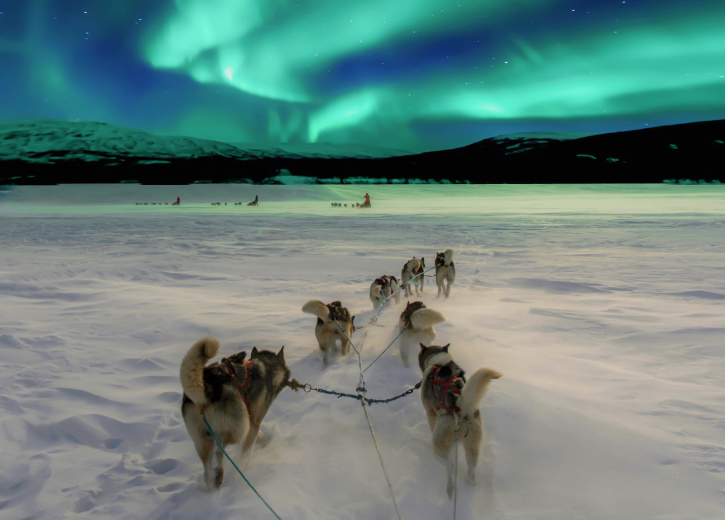
- Try a husky safari or reindeer sleigh ride: These are genuinely memorable experiences that connect you to Lapland’s culture and landscape in a way that has nothing to do with the weather or the night sky.
- Go ice fishing: A quiet, meditative activity that gives you an entirely different relationship with the Arctic environment.
- Visit a reindeer farm: Reindeer herding is central to Sámi and Lappish culture, and a farm visit offers real insight into a way of life that has shaped this landscape for centuries.
It is also worth remembering that the aurora is unpredictable by nature. A sky that is overcast at midnight can clear completely by two in the morning. Keeping the aurora forecast app open and setting an alert for elevated Kp activity means you won’t sleep through a display that appears in the early hours. The fox is elusive, but patience in Saariselkä is almost always rewarded.