


Yes, a digital detox in the Arctic can genuinely improve your mental well-being — and the evidence behind it is more compelling than you might expect. Stepping away from screens and notifications allows your nervous system to reset, and the Arctic environment accelerates that process in ways that few other settings can match. The questions below unpack exactly how and why this works, from the neuroscience of disconnection to what happens in your brain when you watch the Northern Lights.
What does a digital detox actually do to your brain?
A digital detox reduces cognitive overload by removing the constant stream of notifications, decisions, and social comparisons that keep your brain in a low-level state of stress. Within the first 24 to 48 hours of disconnecting from technology, most people experience a measurable shift in mental clarity, reduced anxiety, and improved sleep quality as cortisol levels begin to fall.
The mechanism is straightforward. Every ping, scroll, and notification triggers a small dopamine response, training your brain to seek the next hit of stimulation. Over time, this creates a cycle of restlessness that makes it genuinely difficult to feel calm or focused, even when nothing urgent is happening. When you remove that cycle, your prefrontal cortex, the part of the brain responsible for deep thinking, creativity, and emotional regulation, gets the space it needs to function properly again.
Research in cognitive psychology consistently shows that sustained attention, the kind required for meaningful conversations, creative thought, or simply being present, deteriorates under conditions of constant digital interruption. A true break from screens does not just feel relaxing; it can structurally change how your brain allocates attention in the short term. Many people report that after just two or three days without devices, they begin to notice things they had stopped noticing: the texture of silence, the quality of light, the pleasure of an uninterrupted conversation.
Why does the Arctic environment amplify the effects of a digital detox?
The Arctic environment amplifies the benefits of a digital detox because it removes the conditions that make reconnecting tempting while simultaneously offering powerful sensory experiences that anchor you in the present moment. The combination of extreme quiet, vast natural landscapes, cold, clean air, and the almost complete absence of urban stimulation creates ideal conditions for nervous system recovery.
There is a well-established body of research around what psychologists call “restorative environments” — natural settings that replenish directed attention and reduce mental fatigue. Arctic wilderness scores exceptionally high on the qualities these environments share: perceived vastness, coherence, and a sense of being away. The Finnish Lapland landscape, with its snow-covered fells, frozen lakes, and ancient forests, delivers all three in abundance.
The cold itself plays a role too. Exposure to cold, crisp air and dramatic temperature contrasts has been linked to increased alertness and a heightened sense of physical presence. When your body is engaged with its immediate environment — feeling the bite of frost, listening to snow compress underfoot, watching your breath in the still air — your mind has less bandwidth left over for rumination. That is not a small thing. Rumination, the tendency to replay worries and social anxieties, is one of the primary drivers of poor mental well-being in modern life.
Staying in a glass igloo in Finnish Lapland deepens this effect further. When your bedroom ceiling is made of glass and the wilderness is your constant backdrop, the outside world becomes impossible to ignore in the best possible sense. You are not just near nature; you are immersed in it, even while warm and comfortable.
How does watching the Northern Lights affect your mental state?
Watching the Northern Lights produces a psychological state closely associated with awe — a powerful emotion that research links to reduced self-focused thinking, increased feelings of connectedness, and a significant drop in stress. The experience of witnessing something vast and beautiful that exists entirely outside human control has a grounding effect that is difficult to replicate through any other means.
Awe is one of the more interesting emotions from a mental health perspective. Unlike happiness, which is often tied to personal outcomes, awe temporarily dissolves the sense of self-importance that drives anxiety and overthinking. People who regularly experience awe report higher levels of life satisfaction, greater curiosity, and a more generous orientation toward others. The Northern Lights, unpredictable, silent, and extraordinary, are one of the most reliable triggers for this emotional state that nature offers.
There is also something specific about the way the lights move. The slow, fluid shifts of colour across the sky have a meditative quality. Watching them requires no effort, no interpretation, and no response. You simply observe. For a mind trained by years of digital consumption to expect rapid stimulation and constant feedback, this enforced stillness is both unusual and deeply restorative.
At Aurora Queen Resort, we have positioned our igloos to face north, away from any light pollution, so that when the aurora appears, nothing interrupts the view. Guests often tell us that lying in bed watching the lights move overhead is among the most peaceful experiences of their lives — and from a mental well-being perspective, that aligns entirely with what we know about awe and restorative attention.
What are the signs that you genuinely need a digital detox?
The clearest signs that you need a digital detox include persistent difficulty concentrating, a compulsive urge to check your phone even when you know nothing important has arrived, disrupted sleep patterns, and a general sense of mental restlessness that does not resolve even during leisure time. If relaxation itself has started to feel effortful, that is a significant indicator.
More subtle signs are worth paying attention to too:
- You feel irritable or anxious when separated from your phone, even briefly
- You struggle to read a book or watch a film without reaching for a second screen
- Social media leaves you feeling worse rather than better, but you keep returning to it
- You find it difficult to be fully present in conversations or experiences
- You wake up and check your phone before doing anything else
- Your sleep is light, fragmented, or delayed — often linked to evening screen exposure
None of these signs indicate a serious disorder, but collectively they point to a nervous system that has adapted to a level of stimulation it was never designed for. The good news is that the brain responds quickly to genuine rest. Most people notice a meaningful shift within 48 to 72 hours of real disconnection, particularly when the alternative environment is engaging enough to hold their attention without requiring a screen.
How long does a digital detox need to be to see real results?
A digital detox needs to last at least three to four days to produce genuinely noticeable mental well-being benefits. The first 24 to 48 hours are typically the most uncomfortable, as your brain adjusts to the absence of constant stimulation. Real cognitive and emotional shifts tend to emerge from day three onward, with the most significant benefits accumulating over five to seven days.
This timeline matters when planning a Lapland wellness retreat. A single overnight stay, while valuable, is unlikely to move you past the initial adjustment phase. A stay of four to seven nights gives your nervous system enough time to genuinely downregulate — to shift from a state of low-level vigilance into something closer to genuine rest.
The quality of the environment during the detox also affects the timeline. A passive detox, where you simply avoid screens at home, tends to be slower and less effective because the cues that trigger phone-checking behaviour are still present. An active detox in a genuinely different environment, particularly one as immersive as Arctic Lapland, accelerates the process because your attention has somewhere compelling to go. You are not fighting the urge to check your phone; you are simply too absorbed in something better.
For most people, a five-night stay in Finnish Lapland represents the practical sweet spot: long enough to move through the adjustment phase and into genuine restoration, short enough to fit into most holiday schedules. You can check availability and book your stay to plan your Arctic wellness retreat.
Can a Lapland retreat deliver lasting mental well-being benefits after you return home?
Yes, a Lapland retreat can deliver lasting mental well-being benefits, but the duration of those benefits depends on what you take home with you beyond the memories. The neurological reset that occurs during a genuine Arctic digital detox can persist for weeks, particularly if you return with new habits around screen use, sleep, and attention management.
The psychological concept at work here is called “transfer” — the degree to which insights and behaviour changes from one context carry over into another. Research on restorative experiences consistently shows that the benefits are more durable when the experience itself was deeply meaningful, when the person reflected on it during or after, and when they made at least one concrete behavioural change as a result.
What to bring home from the experience
The most effective way to extend the benefits of a digital detox Arctic retreat is to return with a few specific, manageable changes rather than a vague intention to “use your phone less.” Practical examples include:
- A consistent phone-free period in the morning before you start work
- Keeping devices out of the bedroom to protect sleep quality
- Scheduling one genuinely screen-free day per week
- Spending time outdoors daily, even briefly, without a device in hand
Why the Arctic experience specifically supports lasting change
There is something about the contrast of an Arctic retreat that makes the lessons unusually sticky. When you have experienced the quality of attention that becomes available when you disconnect from technology — the depth of presence, the ease of sleep, the pleasure of genuine silence — ordinary digital habits start to look different. You have a reference point that is hard to ignore.
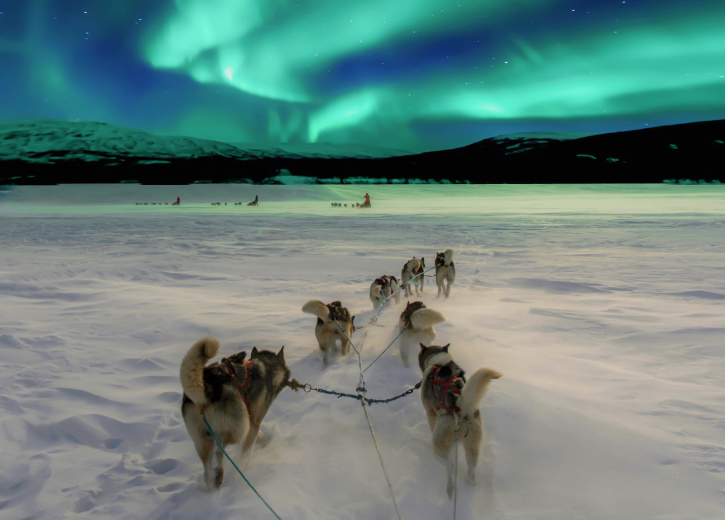
Activities like husky safaris, reindeer sleigh rides, and ice fishing, all available during a stay with us in Saariselkä, reinforce this effect by creating vivid, embodied memories that are tied to a state of presence rather than consumption. Those memories continue to act as anchors long after you return home, reminding you of what a different relationship with technology actually feels like.
The fox you glimpsed at dusk, the silence of the fell at midnight, the Northern Lights moving overhead while you lie warm in your glass igloo — these are not just beautiful moments. They are evidence, stored in your own experience, that the world is richer when you are fully in it.