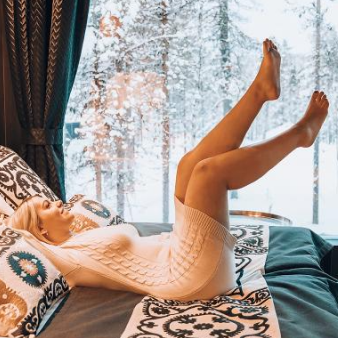

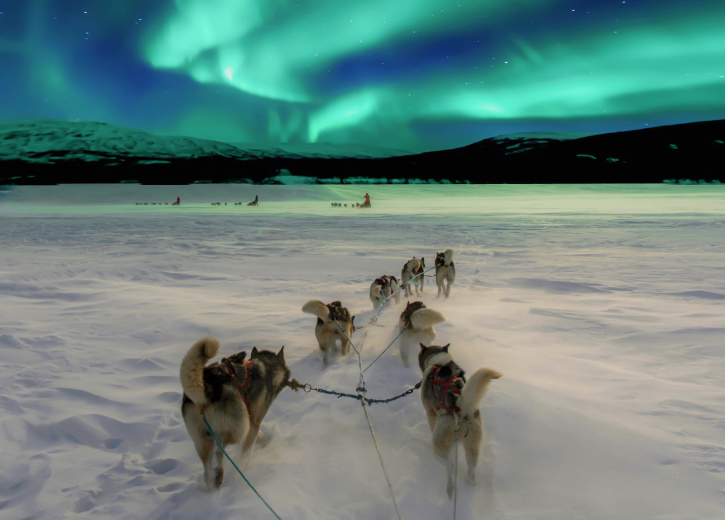
Picture this: you’re nestled under a warm duvet, gazing upward as ribbons of green and violet dance across the Arctic sky, all without stepping foot outside into the minus-twenty-degree night. This is the promise of aurora-view accommodation in Lapland, a unique hotel in Lapland experience that has captured the imagination of travellers worldwide. But with nightly rates often reaching premium levels, the question naturally arises: is watching the northern lights from your bed genuinely worth the investment, or simply an expensive novelty?
The answer isn’t straightforward. Aurora-view stays represent a significant financial commitment, and understanding what you’re actually paying for—beyond the marketing imagery—is essential for making an informed decision. This article examines the realities of glass-ceiling accommodation, the factors that determine whether you’ll actually see the lights, and the broader experience value that extends beyond aurora viewing alone. Whether you’re planning your first Arctic adventure or weighing up accommodation options, you’ll gain the practical insights needed to evaluate if this investment aligns with your travel priorities.
The reality of aurora viewing accommodations
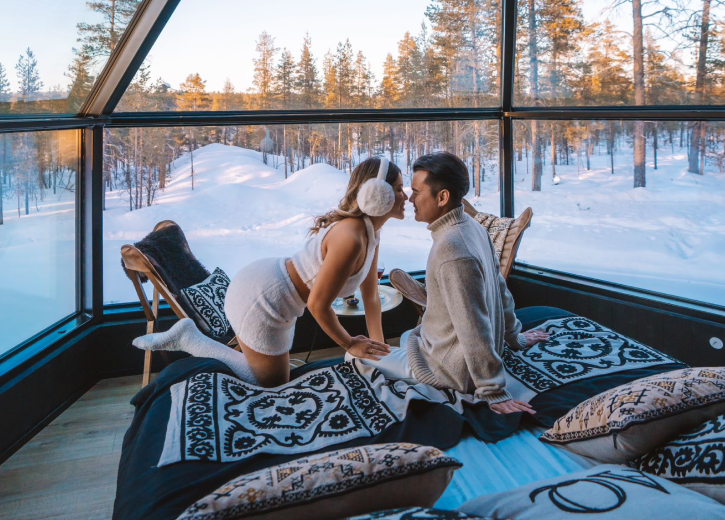
Glass-ceiling igloos and aurora-view suites utilise thermal glass technology that maintains indoor comfort whilst providing unobstructed sky views. The glass panels are typically heated to prevent frost accumulation, ensuring clarity even during the coldest Arctic nights. From your bed, you have a panoramic view of approximately 180 degrees of sky—far more expansive than what you’d see through a standard window, though not quite the full 360-degree experience of outdoor viewing.
The physical experience differs markedly from traditional aurora watching. Rather than standing outdoors for hours in sub-zero temperatures, you can observe from warmth and comfort, making extended viewing sessions genuinely feasible. This matters because aurora displays often develop slowly, with the most spectacular moments sometimes occurring in the early morning hours when outdoor endurance becomes challenging even for hardy travellers.
However, weather dependency remains unavoidable. Cloud cover blocks visibility just as effectively indoors as outdoors, and northern Finland experiences overcast conditions regularly during winter months. Seasonal considerations also play a role—the aurora viewing season runs from late August through April, with peak activity typically occurring around the equinoxes in September and March. During summer months, the midnight sun eliminates darkness entirely, making aurora viewing impossible regardless of solar activity.
Environmental factors within the accommodation itself matter too. Interior lighting must be minimised for optimal viewing, which means you’ll spend evenings in near-darkness if you’re serious about catching the lights. The glass panels, whilst heated, can still create slight condensation in extreme temperature differentials, occasionally affecting clarity. These are minor inconveniences rather than deal-breakers, but they represent the practical realities that marketing materials rarely emphasise.
What determines aurora viewing success?
Understanding northern lights visibility requires knowledge of several interconnected factors. Solar activity forms the foundation—auroras occur when charged particles from the sun interact with Earth’s magnetic field. This activity follows an eleven-year cycle, though significant displays can occur at any point. The sun releases these particles through solar storms and coronal mass ejections, creating the raw material for aurora displays.
The KP index measures geomagnetic activity on a scale from 0 to 9, with higher numbers indicating stronger aurora potential. For northern Finland locations, displays become visible at KP levels of 2 or above, whilst southern regions typically require KP 4 or higher. This geographical advantage stems from proximity to the auroral oval—the ring-shaped zone around the magnetic pole where auroras most frequently occur. Northern Lapland sits directly beneath this oval, providing regular viewing opportunities even during moderate solar activity.
Weather patterns exert equally powerful influence. Clear skies are non-negotiable for aurora viewing, and Arctic weather can be notoriously unpredictable. Checking short-term forecasts becomes a nightly ritual for serious aurora hunters. Light pollution levels also matter significantly—even modest artificial light can wash out fainter displays. This is where location in remote Lapland wilderness provides substantial advantage over accommodations near towns or cities.
Moon phases affect viewing conditions more subtly. A full moon creates enough ambient light to diminish fainter auroras, whilst new moon periods offer the darkest skies and most dramatic contrast. Optimal viewing seasons balance several factors: September through March provides sufficient darkness, though September and October often have clearer weather than the deep winter months when persistent cloud systems settle over the region.
Aurora forecasting has improved dramatically, with apps and websites providing real-time KP index updates and cloud cover predictions, allowing you to maximise your chances during any stay.
Beyond the aurora: the complete experience value
Evaluating aurora accommodation purely on northern lights probability misses a substantial portion of the value proposition. The glass-ceiling design transforms daytime hours as well, framing the Arctic landscape in ways conventional accommodation cannot. Winter sunlight in Lapland creates extraordinary atmospheric effects—the low-angle sun produces extended golden hours, painting snow-covered forests in shades of pink and amber that shift throughout the day.
Stargazing opportunities in these northern latitudes rival aurora viewing for sheer spectacle. The Milky Way stretches across the sky with remarkable clarity, and during new moon periods, you can observe celestial features invisible in more populated regions. Constellations appear different from this northern perspective, with some stars circling the pole without ever setting. This connection with the night sky extends beyond single aurora events to create ongoing engagement with the cosmos.
The immersive nature experience represents perhaps the most significant value element. Glass igloos positioned in wilderness settings provide constant connection with the surrounding environment—watching foxes traverse the snow, observing weather patterns develop across vast skies, experiencing the profound silence of Arctic winter. This environmental immersion creates a meditative quality that many guests find unexpectedly restorative.
Winter tranquillity in remote Lapland offers something increasingly rare: genuine disconnection from urban pace and digital overwhelm. The glass ceiling naturally draws attention upward and outward rather than toward screens. Many guests report that this enforced simplicity—warm shelter, wilderness views, and unhurried time—provides value that extends well beyond the aurora viewing that initially motivated their booking.
Making the investment decision work for you
Strategic timing significantly influences your likelihood of aurora encounters. Booking multiple consecutive nights rather than a single evening increases your probability of experiencing both clear skies and active aurora displays. Shoulder season stays in September or March often provide the best balance of clear weather, active auroras, and reasonable temperatures for any outdoor activities you might want to pursue.
Setting realistic expectations proves essential for satisfaction. Even in prime locations during optimal seasons, you might experience cloudy conditions throughout your stay. Quality aurora-view properties enhance the overall experience through thoughtful location selection and environmental integration—positioning igloos to maximise both sky views and landscape perspectives, using materials that complement rather than intrude upon the natural setting.
At Aurora Queen Resort, our family-owned property in northern Finland, we’ve designed our glass-ceiling igloos specifically to maximise these multiple value dimensions. The geothermal heating and solid wood construction maintain comfort whilst minimising environmental impact, and our remote location provides both minimal light pollution and immersive wilderness surroundings. This approach recognises that whilst aurora viewing remains a highlight, the complete experience encompasses far more.
Evaluating personal priorities helps determine if this investment aligns with your travel values. If your sole objective is photographing the northern lights, you might achieve similar results through standard accommodation combined with dedicated outdoor viewing sessions. However, if you value comfort, extended observation opportunities, comprehensive Arctic immersion, and the unique experience of a glass-ceiling stay itself, then aurora-view accommodation offers genuine value that justifies the premium.
Understanding what quality properties provide—strategic location, thoughtful design, heating systems that maintain clarity, and peaceful environments that enhance the overall experience—helps you distinguish between well-executed aurora accommodation and simple glass structures. The investment works best for travellers who appreciate the full package: the possibility of aurora viewing combined with the certainty of extraordinary Arctic accommodation in one of Lapland’s most magical settings.
Book your unforgettable Lapland holiday
Ready to experience the magic of aurora-view accommodation for yourself? Whether you’re drawn by the prospect of witnessing the northern lights from the comfort of your bed, immersing yourself in Arctic wilderness, or simply disconnecting from everyday life in one of the world’s most extraordinary settings, we invite you to discover what makes Aurora Queen Resort special.
Book your stay at Aurora Queen Resort today and begin planning your Arctic adventure. Our team is ready to help you select the perfect dates and accommodation options to match your travel priorities and maximise your chances of creating memories that will last a lifetime.